Why Construction Projects Lose Money: 6 Hidden Profit Leaks
Every contractor knows there’s a fine line between a profitable project and a financial disaster. Margins are thin, and even small mistakes can compound into significant losses. But why do so many construction projects fail to hit their profit targets? Often, it’s a series of hidden leaks — small inefficiencies, misjudgments, and outdated processes — that drain money from your project.
Let’s break down six of the most common profit leaks and, more importantly, how to fix them.
1. Estimating Errors: The Silent Profit Killer
Inaccurate estimating can severely impact a project’s profitability. Manual estimation processes, such as flipping through lengthy rate books or recalculating spreadsheets, are prone to errors. Tight bid deadlines can exacerbate the problem, leading to guesswork and omissions.
Solution: Use digital tools that automate quantity takeoffs and match rates to standard schedules, reducing manual effort and errors. This can save time and improve accuracy, helping you submit more reliable bids.
2. Poor Bid Markup Decisions
Many contractors struggle to determine the right markup to cover overhead and ensure profitability. Guessing too low can erode profits, while setting it too high risks losing the bid.
Fix: Use structured tools or methods to calculate markups based on real data, such as overhead, labor costs, and desired profit margins. A data-driven approach ensures your bids are competitive yet profitable.
3. Subcontractor Scope Gaps
When subcontractor quotes vary widely in scope, it’s easy to miss critical exclusions or inconsistencies. Choosing the lowest bid without fully understanding what’s included can lead to costly rework, change orders, and delays.
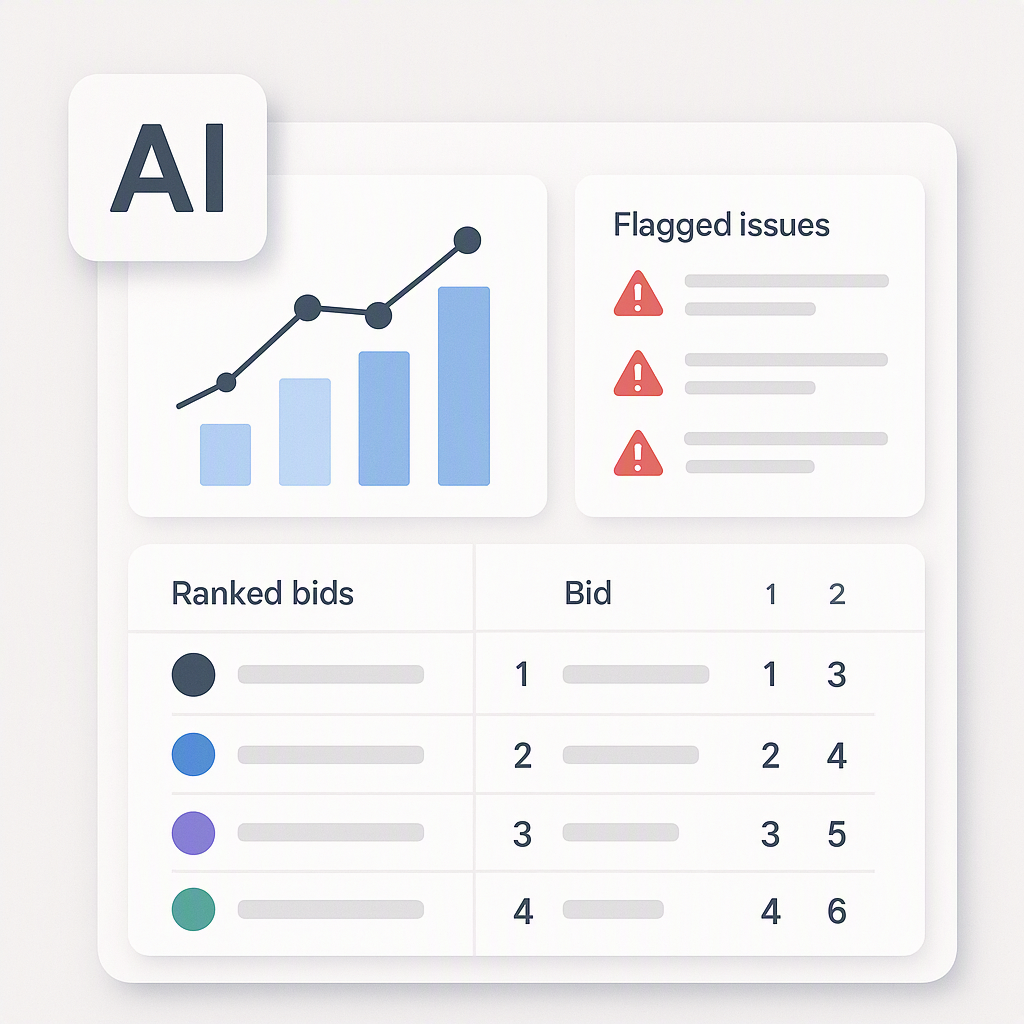
Solution: Implement a robust sub bid leveling process to compare quotes side-by-side. This ensures you account for all scope items and avoid unexpected costs. Digital tools can help streamline this process by normalizing subcontractor quotes and highlighting discrepancies.
4. Inefficient What-If Scenarios
Clients often request multiple “what-if” scenarios before finalizing a bid. If you rely on manual estimation tools like spreadsheets, updating rates or making changes can be time-consuming and error-prone.
Why It Matters: Time spent reworking estimates is time that could be used to prepare other bids, potentially reducing your chances of winning more projects.
Fix: Use estimation software that allows for quick adjustments to rates and scenarios. This not only saves time but also ensures accuracy and provides a clear audit trail of changes.
5. Missed Bid Deadlines
In a competitive market, speed is critical. Delays in preparing and submitting bids can result in missed opportunities, especially when competitors are faster to respond.
Solution: Leverage tools that streamline the bid preparation process, enabling you to respond to more opportunities in less time. This can help you increase your chances of winning projects without overburdening your team.
6. Unrealistic Project Schedules
Tight or poorly planned schedules can lead to rushed work, mistakes, and delays. These issues often result in additional costs, such as overtime pay, expedited material orders, or penalties for missed deadlines.
Fix: Use data-driven planning tools to create realistic schedules that align with your project’s scope and resources. Detailed breakdowns of labor and material requirements can help identify potential scheduling issues early, reducing the risk of costly surprises.
Common Questions About Construction Profit Leaks
1. How do I identify where I’m losing money on a project?
Start by reviewing your past projects. Compare estimated costs to actuals and look for consistent gaps in areas like materials, labor, or overheads.
2. What’s the biggest cause of estimating errors?
Reliance on manual processes and outdated tools. Manual methods increase the likelihood of mistakes, while digital tools can improve accuracy and efficiency.
3. How can I improve subcontractor alignment?
Sub bid leveling is key. Comparing quotes side-by-side ensures you account for all scope items and avoid costly gaps in coverage.
4. Can technology really help with profit leaks?
Yes. Tools that automate takeoffs, streamline rate lookups, and improve bid preparation can significantly reduce inefficiencies and protect your margins.
5. How do I avoid underpricing my bids?
Use structured methods or tools to calculate markups based on real costs and profit margins. A data-driven approach removes guesswork and ensures profitability.
By addressing these hidden profit leaks, you can protect your margins and improve your project outcomes. Estimating errors, subcontractor scope gaps, and inefficient processes don’t just cost money; they also impact your time, reputation, and future opportunities. With the right strategies and tools, you can prevent these leaks and keep your projects on track.