Why BOQ Reporting Formats Matter
BOQs (Bills of Quantities) are the backbone of every construction estimate. Get the format wrong, and you’ll waste time reworking bids—or worse, lose trust with clients. But here’s the catch: there’s no universal “right” format. Different clients, geographies, and standards demand different reporting structures.
For example, a contractor in the U.S. might use CSI MasterFormat, while in India, CPWD DSR compliance is often required. International projects may involve NRM2 or CESMM3. Understanding these standards is essential for accurate and professional BOQ reporting.
The Big BOQ Standards (And When to Use Them)
Here’s a practical rundown of the most common BOQ formats:
-
CSI MasterFormat (US)
- Best for: Large commercial or federal projects in the U.S.
- Structure: Organized by 50+ divisions (e.g., Division 03 for Concrete, Division 26 for Electrical).
- What’s unique: Focuses on work breakdown structure. Great for aligning with project schedules and procurement workflows.
- Common mistake: Overloading it with unnecessary details at the line-item level. Keep it high-level unless the client specifies otherwise.
-
CPWD DSR (India)
- Best for: Government and public-sector projects in India.
- Structure: Rates pre-defined by CPWD (Central Public Works Department) and updated annually.
- What’s unique: Everything is standardized—including units, materials, and labor assumptions. However, navigating the extensive catalog manually can be time-consuming.
- Pro tip: Use tools with search functionality to find rates faster.
-
NRM2 (UK)
- Best for: Quantity surveying and cost planning in the UK.
- Structure: Focused on elemental costs (e.g., Foundations, Superstructure) and detailed measurement rules.
- What’s unique: Heavy emphasis on cost breakdowns (materials, labor, overheads). Preferred by consultants and QS firms.
- Common mistake: Misclassifying work elements. Double-check against NRM2 guidelines.
-
CESMM3 (International)
- Best for: Civil engineering projects in GCC countries and beyond.
- Structure: Very detailed, with a focus on measurable quantities.
- What’s unique: Includes provisions for earthworks, drainage, and other heavy civil works. Used for FIDIC-compliant contracts.
- Pro tip: If you’re pricing projects across borders, CESMM3 pairs well with tools that support multi-country compliance.
Common Pain Points With BOQs
Let’s be honest: BOQs can be a challenge. Here’s why:
-
Version Chaos
- Clients often request last-minute changes. Teams may scramble to update Excel sheets, leading to version mismatches and errors.
-
Rate Mismatches
- Using outdated rates or relying on guesswork can result in inaccurate estimates. Staying updated with market trends is crucial.
-
Format Inconsistencies
- Different projects may require different formats (e.g., NRM2 vs. CPWD DSR). Without a consistent template, reformatting data can be time-consuming.
-
Scope Changes
- Clients frequently change project scopes. If your BOQ isn’t adaptable, you may need to rebuild it from scratch.
How Tools Can Simplify BOQs
Modern tools can help streamline BOQ management in several ways:
- Instant Formatting: Export to formats like CSI MasterFormat, CPWD DSR, NRM2, or AIA G703 with minimal effort.
- Rate Updates: Tools can suggest rate adjustments based on market trends, ensuring your BOQ remains accurate.
- Audit Trails: Track every rate, quantity, or override for compliance and dispute resolution.
- What-If Scenarios: Quickly adjust for changes, such as swapping materials, without manual recalculations.
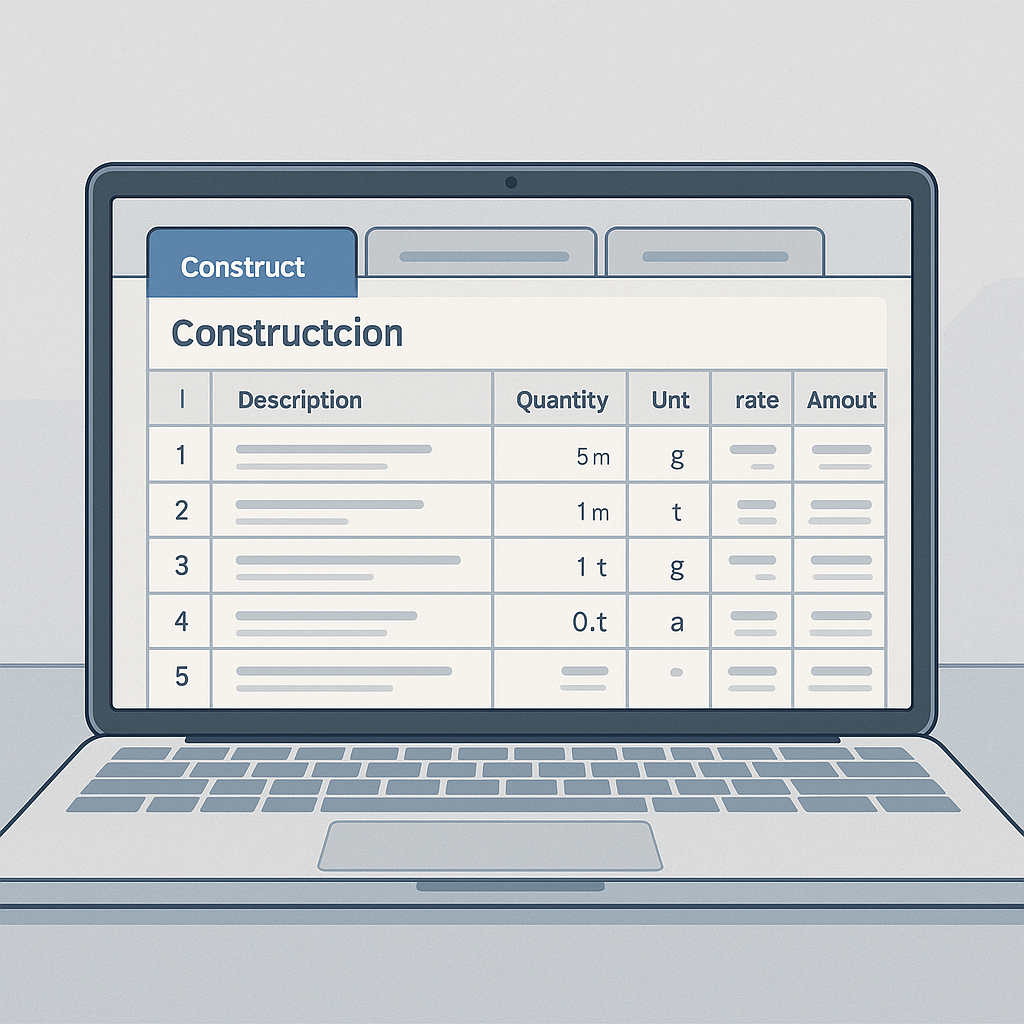
Here’s an illustrative example of how a BOQ output might look:
| Work Item | Quantity | Unit | Rate | Total Cost |
|---|---|---|---|---|
| RCC (200mm slab) | 50 | m³ | ₹8,500 | ₹425,000 |
| Plaster (12mm) | 100 | m² | ₹250 | ₹25,000 |
| Steel Reinforcement | 2,000 | kg | ₹65 | ₹130,000 |
FAQs About BOQ Reporting Formats
Q: Can I use the same BOQ format for all projects?
A: Not if you want to stay competitive. Different clients and regions have different expectations. Always check the tender requirements.
Q: How do I ensure my BOQ stays accurate over time?
A: Update your rates regularly, especially during periods of market volatility. Many tools can automate this process.
Q: What’s the difference between a BOQ and a BOM?
A: A BOQ includes costs for labor, materials, and equipment. A BOM focuses purely on materials.
Q: Can tools handle scope changes mid-project?
A: Yes. Many tools propagate changes across the BOQ in real time.
The Bottom Line
BOQ reporting doesn’t have to be a headache. By understanding the key standards and using tools that simplify formatting, rate updates, and scope changes, you can save time and reduce errors. Consider exploring tools that streamline the process to make your BOQ management more efficient.