What I Used to Think About Vendor Scorecards
If you asked me five years ago how to measure vendor performance, I’d have confidently pointed you to a spreadsheet. I’d have said, “Just track the basics: price competitiveness, delivery timelines, and quality of work.” That’s it. Simple, right?
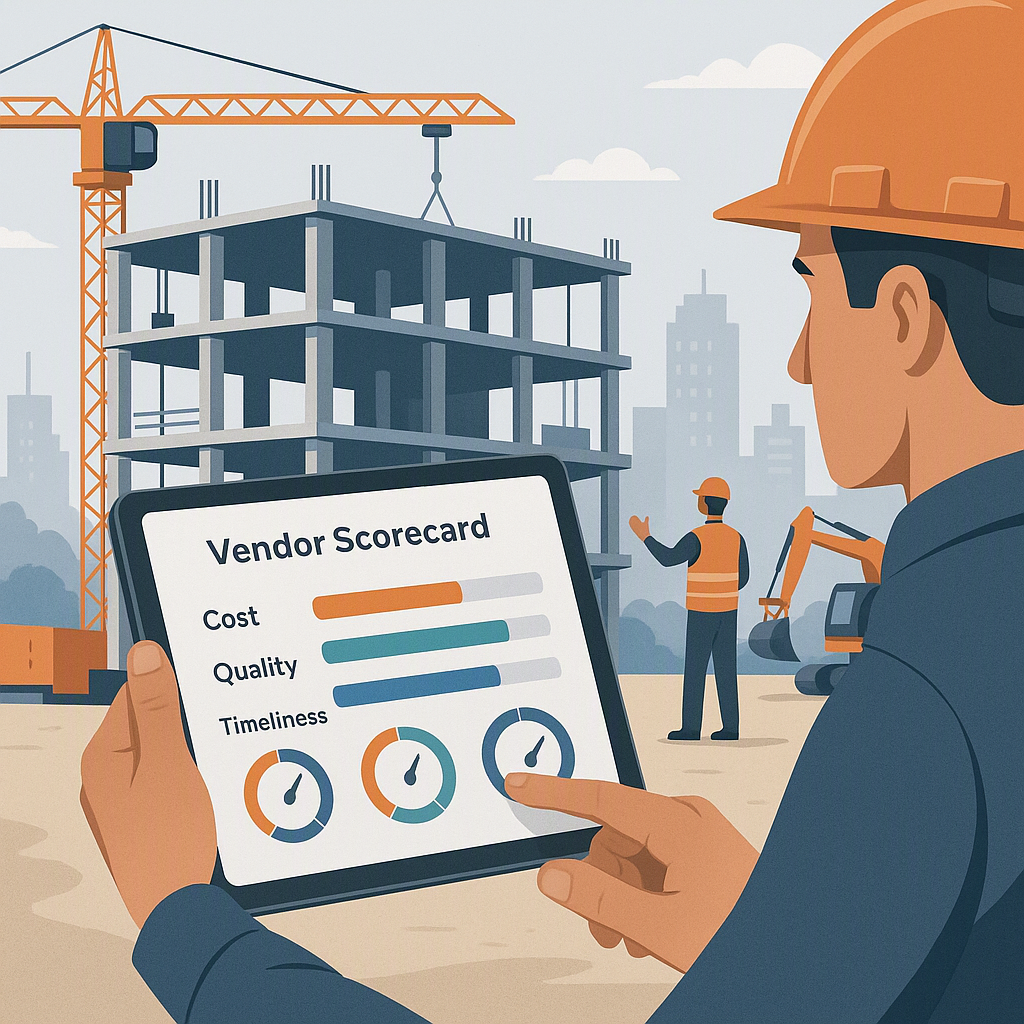
I believed that if you could calculate a vendor's score based on these metrics, you were golden. Add weights, average the results, and voilà—a vendor scorecard that tells you who’s worth keeping around.
I even thought this approach worked well in construction. After all, the industry thrives on measurable outputs. Are the materials on site by the promised date? Did the subcontractor stick to the drawings? Did the delivered concrete meet the design mix specs?
What could go wrong? Turns out, a lot.
What Changed My Mind
There was a project in 2021—a ₹120 crore government complex in Chennai. It was a big deal for our team, and I was managing procurement. We had subcontractors for everything: earthworks, MEP, interiors, landscaping. I set up a detailed vendor scorecard in Excel before the project kicked off. It included metrics like:
- Cost adherence: Was the vendor under the agreed budget?
- Schedule adherence: Did they meet the milestones?
- Quality control: Number of rejected materials or rework instances.
For the first two months, everything seemed fine. The numbers looked good. Then the problems started.
The first hint came from the MEP contractor. Their work was on time and within budget, but site engineers kept complaining about issues—misaligned ductwork, undersized cables, missing fasteners. I dismissed it at first, thinking it was just teething trouble. “They’ll improve once they get into the groove,” I told myself.
But they didn’t. The issues piled up. We had to pause other trades for rework. And the delays started snowballing. By the time we reached the second quarter, the project was hopelessly behind schedule, and the cost overruns were mounting.
When I finally sat down to figure out what went wrong, I realized the scorecard hadn’t flagged this contractor as a problem. On paper, they were doing fine. In reality, they were sinking us. I was baffled.
Why My Old Belief Survived
For a long time, I thought the failure wasn’t in the scorecard but in the execution. Maybe we hadn’t been strict enough about enforcing penalties. Maybe we should have monitored their work more closely. Maybe our engineers should have escalated issues sooner.
I didn’t want to admit the real problem: the scorecard itself was flawed. It treated every metric as equally important, even though some mattered more than others. It missed qualitative factors, like how well a vendor communicated or how quickly they resolved issues. And it didn’t account for the cascading impact of one vendor’s delays on the entire project.
The truth is, I clung to my old belief because it was comfortable. Metrics feel objective. They let you pretend you’re in control. But construction projects are messy, and no spreadsheet can capture the full picture. I had to learn that the hard way.
What I Do Differently Now
Nowadays, I build vendor scorecards with a few key changes:
1. Weight the metrics appropriately
Not all KPIs are created equal. For example, a vendor’s ability to meet safety standards carries more weight than their price competitiveness. Why? Because one safety violation can shut down your site for weeks, while an over-budget package might be mitigated elsewhere.
Here’s an illustrative example of how I structure weights now:
| Metric | Weight | Reason |
|---|---|---|
| Price competitiveness | 20% | Cost matters, but it’s rarely the sole determinant of project success. |
| Schedule adherence | 30% | Delays ripple through other trades, amplifying the impact significantly. |
| Quality of work | 30% | Poor quality leads to rework, additional costs, and cascading delays. |
| Communication responsiveness | 10% | Open communication prevents misalignment and ensures quick issue resolution. |
| Safety compliance | 10% | Safety isn’t negotiable; violations can halt projects entirely. |
When defining weights, consider your project priorities. For high-risk projects, you might give safety compliance even more weight. For a fast-track project, schedule adherence might outweigh everything else.
2. Track qualitative data
Numbers don’t tell the whole story. Now, I make sure we document qualitative feedback from site engineers, project managers, and even other vendors working on the same project. For example, if a subcontractor consistently blames others for delays, that’s a red flag, even if their schedule adherence score is perfect.
To gather qualitative data, I use:
- Weekly site meetings: Encourage open discussions about vendor performance.
- Feedback forms: Engineers and managers document issues immediately.
- Cross-vendor observations: Ask adjacent trades how well the vendor collaborates.
3. Use AI tools to catch patterns
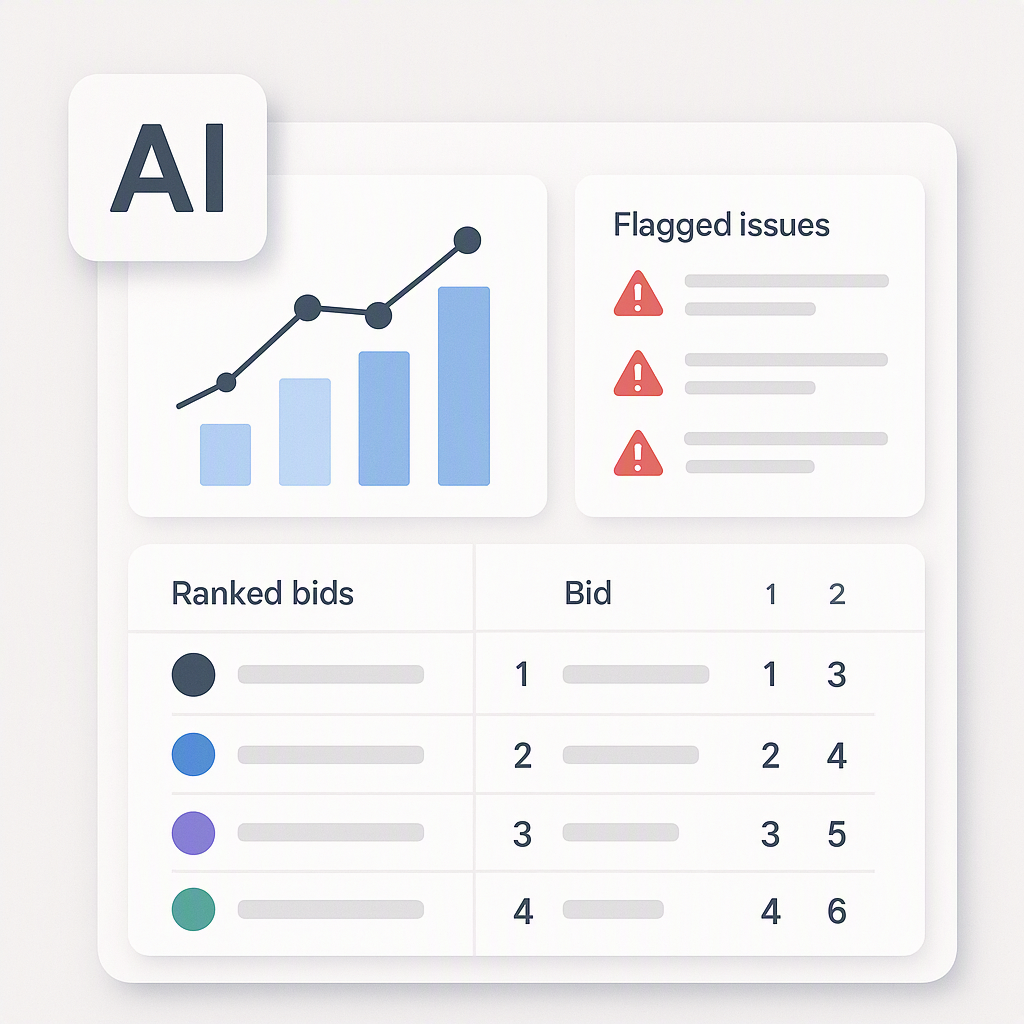
This is where platforms like EstimateNext come into play. Their Sub Bid Leveling tool not only normalizes vendor bids but also flags deviations, outliers, and scope mismatches. It’s not a replacement for human judgment, but it’s a great safety net.
For example, in one recent project, we used the tool to compare five bids for a structural steel package. The lowest bidder looked good until we noticed a glaring omission: they hadn’t included fireproofing costs. The AI flagged the discrepancy, and we avoided a disaster.
4. Measure impact on other trades
One vendor’s delay is another’s nightmare. For example, late MEP installation can delay drywall, painting, and flooring. Now, I factor in a vendor’s ability to collaborate with others. Did they coordinate with adjacent trades? Did they provide realistic timelines, or did they overpromise?
To assess this, I ask:
- How many RFIs (requests for information) did the vendor issue? Did they flag potential interdependencies upfront?
- Were their schedules realistic, or did they create bottlenecks for other trades?
- Did they proactively solve issues impacting other vendors?
What Being Wrong Cost Me
That Chennai project ended up 15% over budget and four months late. We lost money, and I lost sleep. Worst of all, we damaged relationships with our client and some subcontractors.
Even now, I’m not sure I’ve got it all figured out. How do you measure a vendor’s willingness to go the extra mile? Or their ability to innovate when faced with a problem? These are critical factors, but they’re hard to quantify.
What I do know is this: a good vendor scorecard needs to be dynamic. It should adapt to what’s happening on the ground, not just what’s on paper. Tools like EstimateNext can help, but they’re not a panacea. The judgment of experienced professionals still matters.
Conclusion
If I could go back to 2021, I’d do things differently. I’d build a scorecard that actually reflects the messy reality of construction projects. And I’d use tools like EstimateNext to remove blind spots, not just automate what I was already doing wrong.
If you’re struggling with vendor performance, it’s time to rethink your approach. Explore how EstimateNext can help →