Why DSR Rates Matter
If you’ve ever worked on government construction projects in India, you already know how critical DSR (Delhi Schedule of Rates) rates are. They’re the backbone of public tenders, defining everything from material costs to labor charges. But let’s face it—the calculation process is anything but straightforward. Miss a rate update or apply the wrong inflation adjustment, and your bid could be non-compliant or uncompetitive.
The Basics of DSR Rate Calculation
DSR rates are updated periodically by the Central Public Works Department (CPWD). They reflect:
- Base Rates: Costs for materials, labor, and equipment.
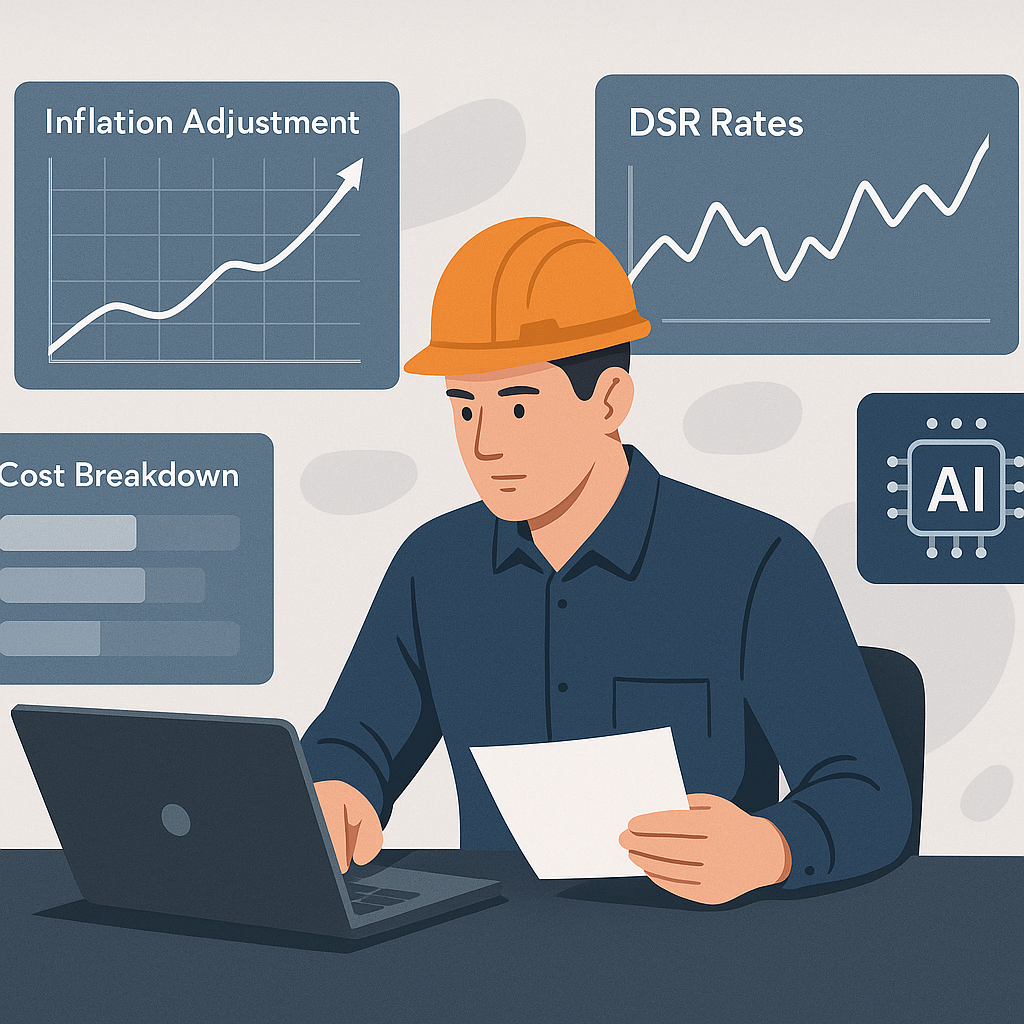
- Inflation Adjustments: Annual updates that account for market fluctuations.
- Local Factors: Regional variations in labor costs and material availability.
For contractors, it’s essential to adjust DSR rates for local labor costs and inflation indices. This isn’t optional—the CPWD mandates these adjustments for compliance.
The Common Pain Points
- Manual Lookups: Flipping through extensive DSR catalogs to find a single rate is a productivity challenge.
- Inflation Confusion: Applying the wrong CPI adjustment can lead to incorrect bids.
- Rate Breakdown: Lump-sum rates without transparency can erode client trust.
A Smarter Way: Leveraging AI Tools
This is where platforms like EstimateNext come in. Instead of wasting time manually searching for rates, you can use AI-powered tools to:
- Search Across Thousands of Items: A semantic search engine eliminates the need for flipping through PDFs.
- Automate Inflation Adjustments: Apply catalog-specific CPI uplifts without guesswork.
- Break Down Costs: Get clear material, labor, and equipment breakdowns for each rate.
Illustrative example — If your client asks for the cost of a 200mm RCC slab, you can retrieve the base rate and a detailed breakdown showing how material and labor costs were computed. Transparency builds trust, and it’s faster.
How to Apply DSR Rates Effectively
Here’s a framework:
- Import Standard Rates: Use a searchable database like EstimateNext to ensure compliance.
- Adjust for Local Factors: Apply city-specific uplifts using reliable cost indices.
- Validate Rates: Break down each rate into components to ensure accuracy and transparency.
FAQ
Q: What happens if I use outdated DSR rates?
A: Your bid could be flagged as non-compliant, potentially disqualifying it.
Q: How often are DSR rates updated?
A: CPWD typically updates rates annually, but inflation adjustments can occur more frequently.
Q: Can AI tools replace human estimators?
A: No, but they can eliminate repetitive tasks like manual rate lookups and inflation adjustments, freeing up estimators for strategic work.
Call to Action
If navigating DSR rates feels like a headache, EstimateNext can help. With tools designed for faster rate analysis and compliance, it’s a smarter way to bid.