Why Understanding Hard and Soft Services Matters
Facilities management (FM) isn't just about fixing what's broken or keeping things clean. It's about ensuring that buildings, spaces, and systems work efficiently while creating environments people want to inhabit. If you're in charge of FM, you've likely faced the question: hard services or soft services? What's the difference, and how do you manage both effectively?
Neglecting either side can lead to inefficiencies and increased costs. Hard FM often gets more attention because it feels urgent—no one ignores a broken HVAC system—but ignoring soft FM can lead to gradual inefficiencies that impact overall operations.
Here’s a detailed breakdown of the two categories and how to manage them effectively.
Hard FM Services: The Backbone of Any Facility
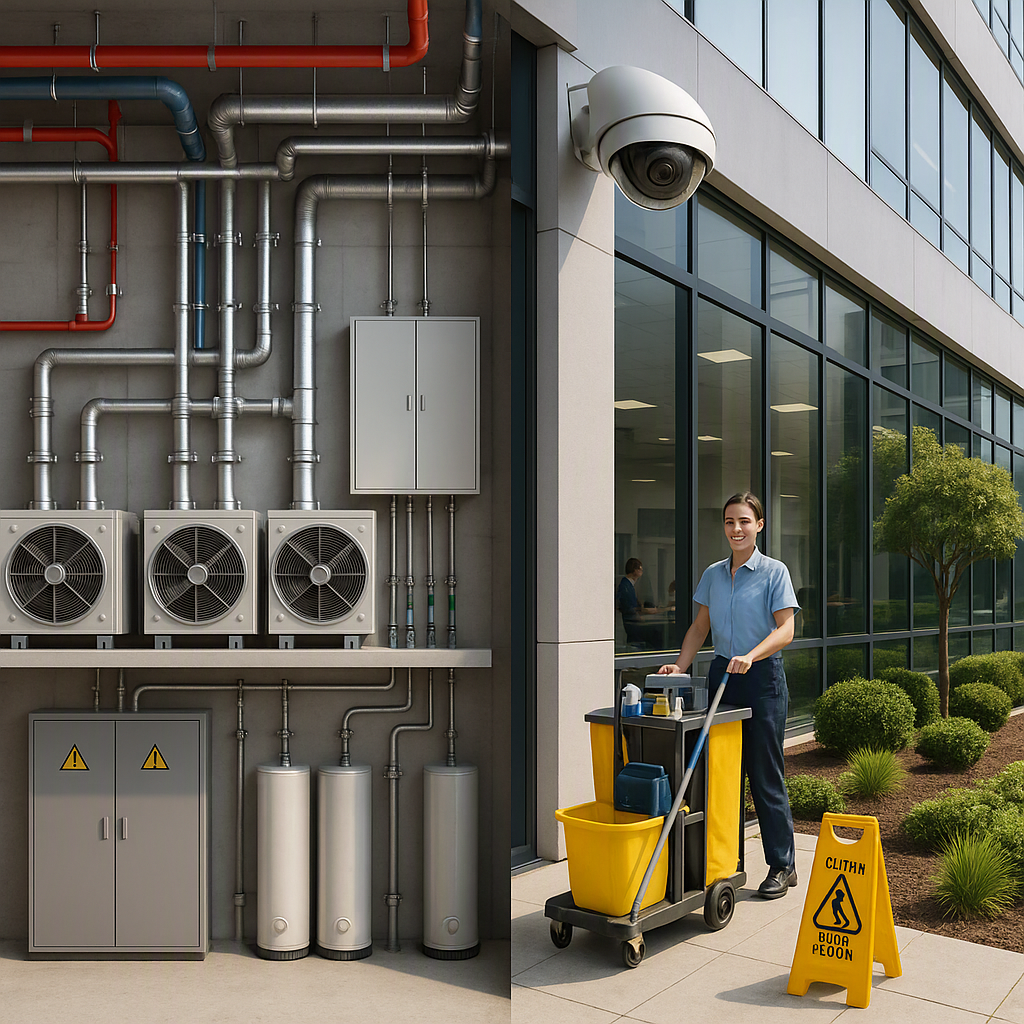
Hard services are the non-negotiables. These are tied directly to the building's physical structure and mechanical systems. If these fail, operations grind to a halt. Here are the major categories:
1. HVAC Systems
- Heating, ventilation, and air conditioning systems are critical for occupant comfort and safety. Industry standards like ASHRAE for air quality or SMACNA guidelines for ductwork design are often used to ensure compliance.
- Common challenge: Reactive maintenance. Waiting for an HVAC breakdown instead of scheduling preventive checks increases costs exponentially.
- Solution: Implement preventive maintenance schedules and use tools to calculate system loads and optimize designs. For example, validating designs against industry standards can help avoid costly rework.
- Actionable Step: Use a computerized maintenance management system (CMMS) to track HVAC inspection dates and schedule regular maintenance automatically. This reduces human error and ensures compliance with industry standards.
2. Electrical Systems
- From basic wiring to complex panel setups, electrical systems keep the lights on—literally.
- Common challenge: Overloaded circuits due to poor load calculation.
- Solution: Use resources like NEC Table 220 for accurate load calculations and ensure compliance with electrical codes.
- Actionable Step: Conduct a detailed energy audit to assess current load demands. Align future designs with both immediate and projected needs to avoid costly retrofits.
3. Plumbing
- This includes water supply, drainage, and fixtures.
- Common challenge: Incorrect pipe sizing often leads to water pressure or drainage issues.
- Solution: Utilize fixture unit calculators to ensure proper pipe sizing and compliance with plumbing standards.
- Actionable Step: Implement water conservation strategies, such as low-flow fixtures, and monitor water usage for early detection of leaks or inefficiencies.
4. Fire Safety Systems
- Sprinklers, alarms, and emergency escape routes fall under this category.
- Common challenge: Retrofitting fire systems to meet NFPA 13 standards after installation errors.
- Solution: Plan fire safety systems during the design phase and use modeling tools to simulate layouts for compliance.
- Actionable Step: Conduct annual fire drills and inspect all safety equipment regularly. Ensure documentation is up-to-date for audits or insurance purposes.
Soft FM Services: The Often-Ignored Essentials
Soft services focus on the human experience within the facility. They aren’t tied to the building’s structure but are just as critical.
1. Cleaning and Janitorial Services
- Daily cleaning, waste management, and periodic deep cleans fall here.
- Common challenge: Overstaffing or understaffing. Both hurt your bottom line.
- Solution: Use scheduling software to optimize shifts based on building usage patterns and ensure efficient resource allocation.
- Actionable Step: Conduct a utilization study to determine peak building usage times. Align cleaning schedules with these peaks to maximize efficiency without sacrificing cleanliness.
2. Security
- Includes CCTV monitoring, access control, and physical security personnel.
- Common challenge: Contracting security services without clear scope leads to overspending.
- Solution: Clearly define the scope of services and compare vendor offerings to avoid redundancy and overspending.
- Actionable Step: Use a security assessment checklist to identify vulnerabilities. Then, invest in scalable solutions like cloud-based monitoring systems for long-term savings.
3. Landscaping
- Maintenance of greenery, lawns, and external spaces.
- Common challenge: Seasonal cost spikes for services like snow removal or pest control.
- Solution: Plan for seasonal fluctuations in your annual budget and negotiate long-term contracts with service providers to stabilize costs.
- Actionable Step: Incorporate native plants into landscaping designs to reduce maintenance and water requirements. This can also save costs over time.
4. Catering and Vending
- Includes cafeteria services and vending machines.
- Common challenge: Poor vendor management leading to inconsistent service.
- Solution: Standardize vendor comparisons and ensure contracts include clear service level agreements.
- Actionable Step: Survey employees periodically to ensure the catering services meet expectations. Use feedback to refine vendor contracts during renewals.
5. Reception and Front Desk Management
- First impressions matter, and well-managed reception services set the tone.
- Common challenge: High turnover for front desk staff.
- Solution: Implement cross-training programs for staff to ensure continuity during transitions.
- Actionable Step: Use visitor management software to streamline check-ins and reduce the burden on reception staff.
Managing Hard and Soft FM Together
Here’s where it gets tricky. These services don’t exist in isolation. A poorly-maintained HVAC system can increase janitorial costs due to moisture buildup and mold. Inefficient lighting systems drive up cleaning costs because poorly lit areas take more time to clean effectively.
The Case for Integrated Management Systems
Many FM teams juggle multiple tools—Excel, email, scheduling software, and standalone maintenance apps. This fragmented approach can lead to inefficiencies and missed connections between hard and soft services.
Illustrative Example: Imagine a scenario where a team uses one platform for hard FM services like HVAC maintenance scheduling and another for soft FM services like cleaning contracts. Without integration, they might miss opportunities to optimize costs, such as aligning cleaning schedules with HVAC maintenance to reduce mold-related cleaning.
Centralized management systems can help bridge these gaps. By integrating hard FM (like HVAC load calculations) with soft FM (like janitorial vendor management), you can avoid costly redundancies and improve overall efficiency.
| Feature | Hard FM Services | Soft FM Services |
|---|---|---|
| Preventive Maintenance | HVAC, electrical, plumbing, fire safety | Cleaning, security, landscaping |
| Budgeting | Focus on long-term structural/system reliability | Focus on human experience and seasonal changes |
| Integration Needs | Energy audits, compliance tools | Vendor contracts, scheduling software |
| Key Metrics | Downtime hours, repair costs | Complaint resolution times, employee feedback |
Common Mistakes (and How to Avoid Them)
-
Ignoring Preventive Maintenance:
- Skipping scheduled checks for HVAC or elevators saves money short-term but guarantees higher repair costs later.
- Solution: Use automated scheduling tools to stay ahead.
-
Underestimating Soft FM Costs:
- Cleaning and security are seen as low-priority until they’re not. This leads to last-minute budget overruns.
- Solution: Assign dedicated budget lines to soft FM from day one.
-
Vendor Overlap:
- Hiring multiple vendors for overlapping services often results in double billing.
- Solution: Normalize vendor quotes and scope with comparison tools.
-
Poor Data Integration:
- Hard FM data (e.g., energy usage) isn’t shared with soft FM teams (e.g., janitorial schedules), leading to inefficiencies.
- Solution: Use platforms that integrate data streams across FM categories.
Final Thoughts
Facilities management isn’t just about fixing HVAC systems or hiring janitors—it’s about creating a symbiotic relationship between hard and soft services. By integrating management systems and prioritizing preventive measures, you can ensure both efficiency and cost-effectiveness in your operations.