Revolutionizing Construction Management with AI: A Practical Guide
In the realm of construction, managing on-site activities has traditionally been a juggling act of meticulous planning, coordination, and supervision. For decades, these tasks relied heavily on manual methods, supported by years of practice and experience. However, with the advent of advanced technology, particularly AI-powered platforms, this traditional approach is being re-evaluated.
The Shift from Traditional to AI-Integrated Management
For years, traditional methods were considered the bedrock of construction management due to their established reliability. This was largely because the industry had yet to see viable technological alternatives. Traditional processes, as noted by VisiBuild, required intense human intuition to navigate the complexities of on-site management.
However, AI-powered platforms are challenging this notion by automating repetitive tasks and providing data-driven insights that support strategic decision-making. According to Onsite, their AI platform connects document management, workflow automation, field quality, project controls, and digital construction, thus enhancing both efficiency and accuracy.
Actionable Steps to Integrate AI in Construction Management
-
Start with a Needs Assessment: Identify specific pain points in your current management processes. Are rate analyses time-consuming? Is compliance a recurring issue?
-
Select the Right AI Tools: Choose platforms that offer the features you need — whether it’s document management, compliance checks, or collaboration tools.
-
Pilot Testing: Implement the AI tools on a smaller scale to evaluate their effectiveness and make necessary adjustments.
-
Training and Adaptation: Equip your team with the skills needed to leverage AI tools effectively. This includes understanding how to interpret AI-generated insights.
Handling Multi-Market Complexity
For construction projects spanning multiple markets, AI tools offer significant advantages. They can manage varying measurement standards, currencies, tax regimes, and labor rules across regions. This capability is crucial because, as noted by OnSite Construction Management, multi-market operations often lead to inefficiencies and compliance challenges.
| Feature | Traditional Approach | AI-Integrated Approach |
|---|---|---|
| Rate Analysis | Manual, error-prone | Automated, accurate |
| Compliance | Manual checks | Integrated, real-time checks |
| Collaboration | Limited, siloed | Seamless, integrated |
Streamlining Rate Analysis and Compliance
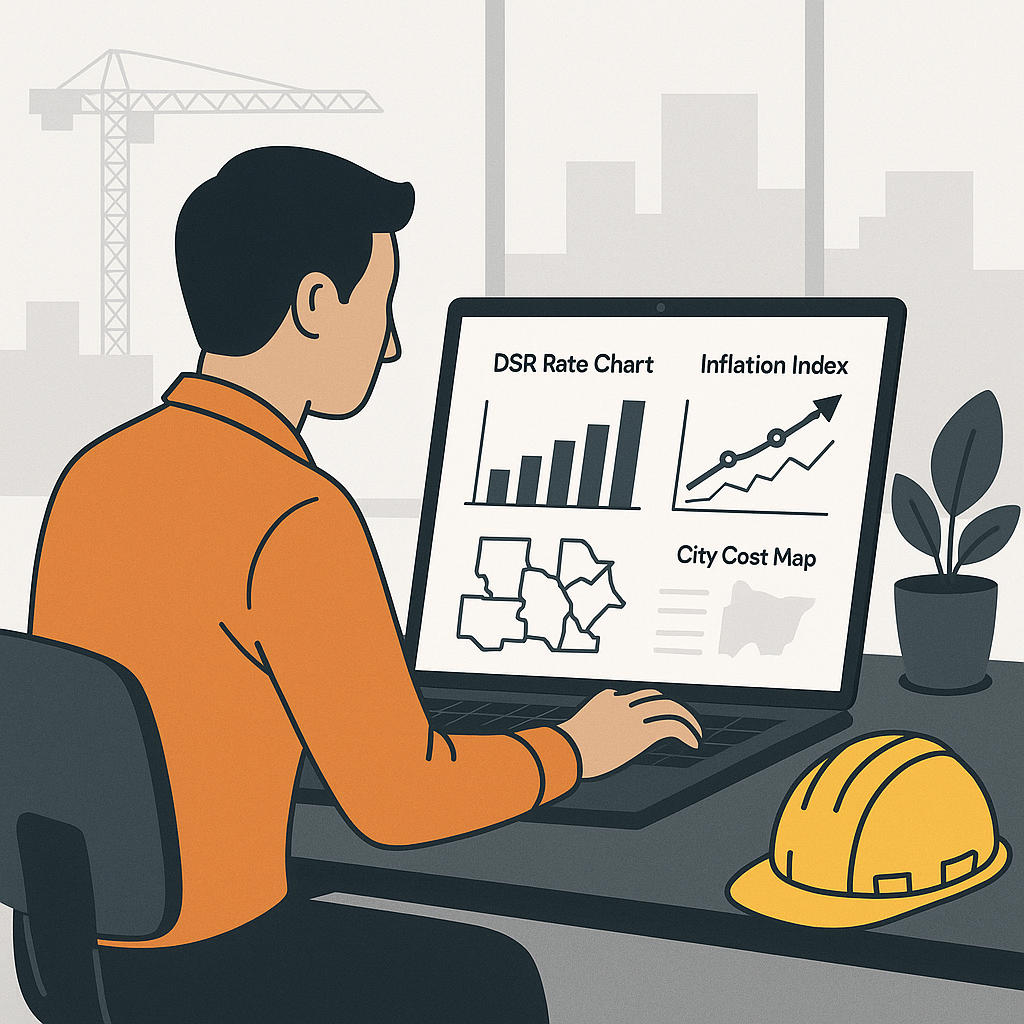
Rate analysis and cost factor profiling have long been cumbersome, involving manual searches through extensive rate books. AI platforms streamline this process by providing quick access to necessary data, significantly reducing the time and potential for error.
Similarly, ensuring compliance is a formidable challenge due to the unique standards across regions. AI tools can embed compliance checks into workflows, making adherence a seamless part of project management. This integration is vital for maintaining quality and avoiding legal issues.
Ensuring Compliance with AI
- Real-Time Updates: AI tools can automatically update compliance standards as regulations change.
- Integrated Workflows: Embed compliance checks into daily operations to minimize oversight.
Enhancing Collaboration
In today's interconnected world, seamless communication between teams is essential. AI can facilitate smoother collaborations by offering insights and enhancing communication channels.
Steps to Improve Collaboration with AI
-
Utilize AI-Driven Communication Platforms: Implement platforms that enable real-time updates and data sharing.
-
Set Clear Communication Protocols: Ensure all team members know how to use these tools effectively.
Balancing AI with Human Expertise
Despite the advancements AI brings to construction management, there is still a degree of uncertainty. Concerns about data security and the potential over-dependence on technology are valid. What happens if the system fails? These questions underline the importance of balancing AI solutions with human oversight and expertise.
Preparing for Potential AI Failures
- Backup Systems: Always have a backup plan that includes manual processes.
- Continuous Monitoring: Regularly assess the performance of AI tools to identify potential issues early.
Conclusion
AI tools offer substantial benefits for those managing the complexities of on-site construction. By automating routine tasks and providing strategic insights, AI can significantly enhance efficiency and accuracy. However, it’s crucial to adopt a balanced approach, integrating these tools while maintaining human oversight to safeguard against potential system failures.
Exploring AI tools is not just an option but a strategic necessity for modern construction management.