Subcontractors: The Silent Margin Killers
Subcontractor management is a double-edged sword. On one hand, they help scale operations fast. On the other, they’re often the reason costs spiral out of control. Missed progress updates, delayed work measurements, and inflated claims are more common than most contractors admit. The result? Bleeding margins.
We’ve seen this happen repeatedly on mid-size projects (₹50-100 crore budgets). A contractor in Mumbai recently shared how a simple delay in work measurements led to overbilling by 12%. That’s not a typo—12%. Multiply that across 10 sites, and you’re staring at a financial black hole.
But the problem isn’t just financial—it’s operational. Mismanaged subcontractor workflows lead to disputes, project delays, and strained client relationships, all of which could jeopardize future contracts.
This article will explore the pitfalls of traditional subcontractor management, why construction-specific ERP systems are a game-changer, real-world case studies, actionable steps, and frequently asked questions to help you regain control of your margins.
Why Traditional Methods Fail
Most contractors still rely on Excel or WhatsApp to track subcontractor progress. Sure, it feels manageable at first. But as projects scale, so does the chaos. Here’s what typically goes wrong:
1. Delayed Work Measurements
Measurement sheets don’t get updated in real time. By the time they’re reviewed, the damage is done. For instance, a contractor in Hyderabad shared how a two-week delay in updating measurement sheets led to overbilling by ₹25 lakh on a single site. This wasn’t discovered until an external audit flagged discrepancies in RA (Running Account) bills.
2. Missed Scope Adjustments
Changes in the Bill of Quantities (BOQ) or project scope often aren’t communicated properly to all stakeholders. This leads to disputes and inflated claims. A study by KPMG found that 30% of construction disputes arise from poorly managed scope changes.
3. Lack of Payment Controls
Manual processes mean payments often go out without proper validation. Subcontractors may submit inflated progress reports, and without a clear oversight mechanism, these claims can slip through. One high-profile case in Bengaluru involved a contractor who overpaid subcontractors by ₹1.2 crore due to unchecked claims.
4. Lack of Centralized Data
When data is scattered across emails, WhatsApp chats, and Excel sheets, it’s nearly impossible to get a real-time view of project progress. This fragmentation fosters miscommunication and delays in decision-making.
5. Reactive Problem Solving
Traditional methods are inherently reactive. Issues are addressed only after they’ve escalated into larger problems. For example, a dispute over work quality may only come to light after the subcontractor has been paid, making it harder to recover costs.
Does this sound familiar? If yes, you’re not alone. A study by NWAY ERP highlights that poorly managed subcontractors can increase project costs by up to 20%.
The ERP Solution: Real-Time Subcontractor Tracking
This is where construction ERP systems, like JobNext, come into play. Unlike generic software, construction ERPs are tailored to the specific needs of contractors, offering tools to manage subcontractors efficiently and in real time.
Key Features of Construction ERPs:
-
Structured Workflows: From work requisitions (WR) to work orders (WO), every step is tracked within the system. This ensures accountability and traceability.
-
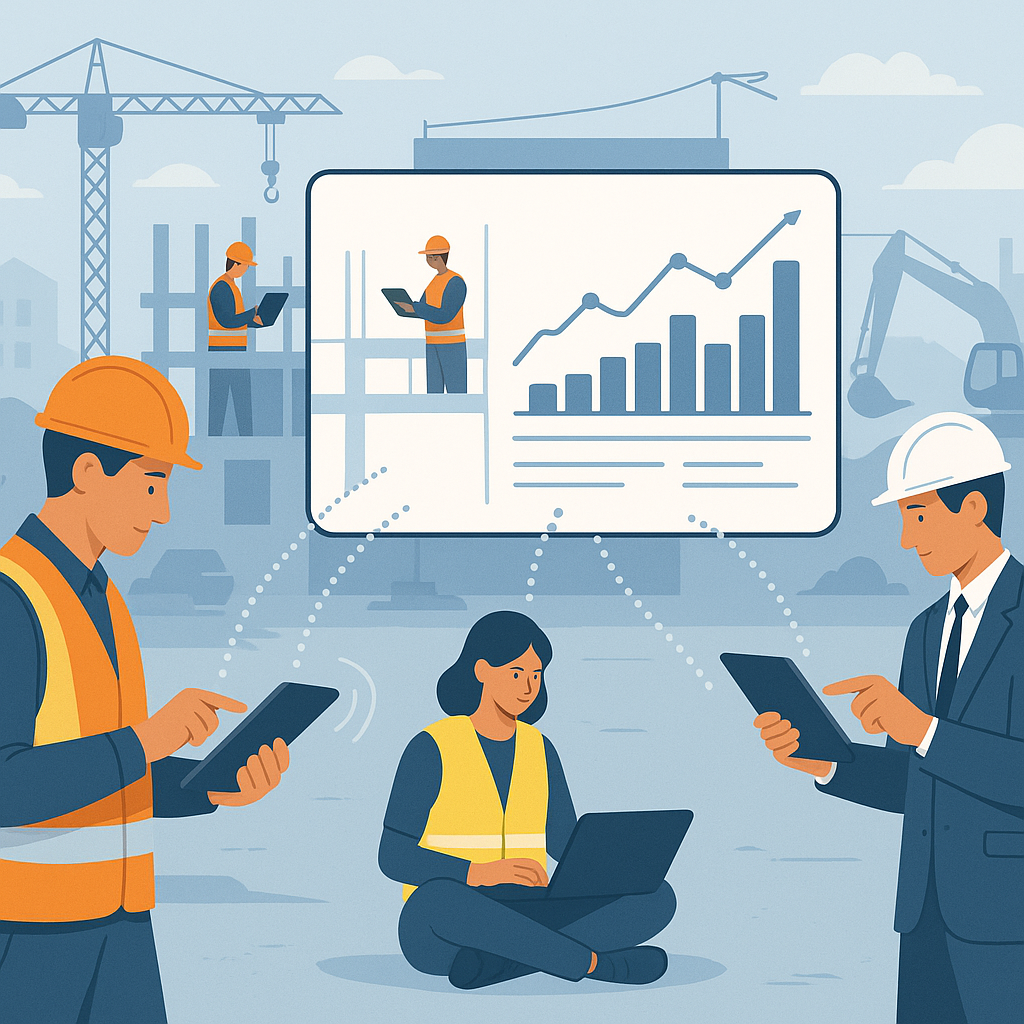
Real-Time Measurements: On-site teams can input progress directly into the system via mobile devices. Dashboards update instantly, providing project managers with a live view of progress.
-
Controlled Payments: Payments are tied to verified progress. For example, billing is only processed for work that has been measured and approved. This eliminates the risk of overpayments.
-
Scope Management: Any changes to the BOQ or project scope are updated in the system and communicated to all stakeholders in real time, minimizing disputes.
-
Centralized Data: All project data is stored in one place, accessible to authorized users, ensuring transparency and reducing the risk of miscommunication.
Benefits of Real-Time Tracking:
- Reduced Disputes: Subcontractor disputes drop by as much as 40% when real-time tracking is implemented.
- Significant Cost Savings: One JobNext customer reported saving ₹1.5 crore annually simply by plugging billing gaps for subcontractors. Source: JobNext Blog
- Time Efficiency: Project managers spend less time reconciling data and more time on strategic decision-making.
Real-World Examples
Example 1: Saving 8% on a GCC Project
A mid-sized contractor in Oman was managing 15 projects across various sites. Subcontractor claims were eating into 8% of their annual revenue. After implementing JobNext, they reduced disputes by 50% and saved ₹2.8 crore in a single fiscal year. How? By ensuring work was measured and validated in real time.
Example 2: Plugging a ₹1.2 Crore Billing Gap in Bengaluru
A Bengaluru-based contractor faced a recurring issue of overbilling. By switching to JobNext, they were able to implement controlled payments tied to verified progress. Within the first year, they identified ₹1.2 crore worth of billing discrepancies and eliminated them.
Example 3: Reducing Disputes in a Mumbai Metro Project
A contractor working on the Mumbai Metro project adopted JobNext to manage their subcontractors. Previously, they faced weekly disputes over scope changes and progress claims. With real-time tracking and centralized data, disputes dropped by 60%, and project delays were reduced by 15%.
Actionable Steps to Improve Subcontractor Management
1. Audit Your Current Processes
- Identify all the tools and methods you currently use to manage subcontractors.
- Highlight areas where delays, disputes, or overpayments frequently occur.
2. Standardize Workflows
- Create a standard operating procedure (SOP) for subcontractor management. This should include clear guidelines for work requisitions, work orders, and payment approvals.
3. Invest in a Construction-Specific ERP
- Evaluate ERP options that cater specifically to construction projects. Look for features like real-time tracking, BOQ management, and RA billing support.
- Pilot the system on one or two projects before rolling it out company-wide.
4. Train Your Team
- Ensure that your project managers, site engineers, and finance teams are trained to use the ERP effectively.
- Regularly update your teams on any changes to workflows or system features.
5. Monitor and Optimize
- Use the data from your ERP to identify trends and areas for improvement.
- Continuously refine your processes based on insights from the system.
FAQs
1. Why can’t I just use Excel and WhatsApp?
While Excel and WhatsApp are convenient, they lack the scalability and real-time tracking needed for complex construction projects. As your projects grow, the likelihood of errors, miscommunication, and delays increases exponentially.
2. Aren’t ERPs expensive?
While the initial investment can seem high, the cost savings from reduced disputes, overbilling, and project delays often outweigh the upfront costs. For example, one contractor saved ₹1.5 crore annually after implementing JobNext.
3. How long does it take to implement an ERP?
Implementation timelines vary depending on the size of your organization and the complexity of your projects. Most contractors can start seeing results within 3-6 months of implementation.
4. What if my team isn’t tech-savvy?
Many modern ERPs are designed with user-friendly interfaces and offer robust training programs. Additionally, most providers offer ongoing support to help your team adapt.
5. How do I choose the right ERP for my business?
Look for systems that are specifically designed for construction projects. Key features to prioritize include real-time tracking, BOQ and RA billing support, and centralized data management.
Comparison Table: Traditional Methods vs Construction ERP
| Feature | Traditional Methods | Construction ERP Systems |
|---|---|---|
| Data Accessibility | Scattered across platforms | Centralized and real-time |
| Work Measurement | Manual and delayed | Real-time and automated |
| Payment Control | Prone to errors | Tied to verified progress |
| Scope Management | Prone to miscommunication | Updated and shared instantly |
| Scalability | Limited | Highly scalable |
| Cost Savings | Minimal | Significant |
The Bottom Line
If subcontractor costs are eating into your margins, it’s time to rethink your approach. Real-time tracking isn’t just a nice-to-have—it’s a necessity. Tools like JobNext don’t just save money; they save sanity. By implementing a construction-specific ERP system, you can eliminate overbilling, reduce disputes, and ensure smoother project execution.
Call to Action
Tired of subcontractor cost overruns? It’s time to take control of your projects with the right tools. See how JobNext can help you track, validate, and control costs in real time. Learn more →