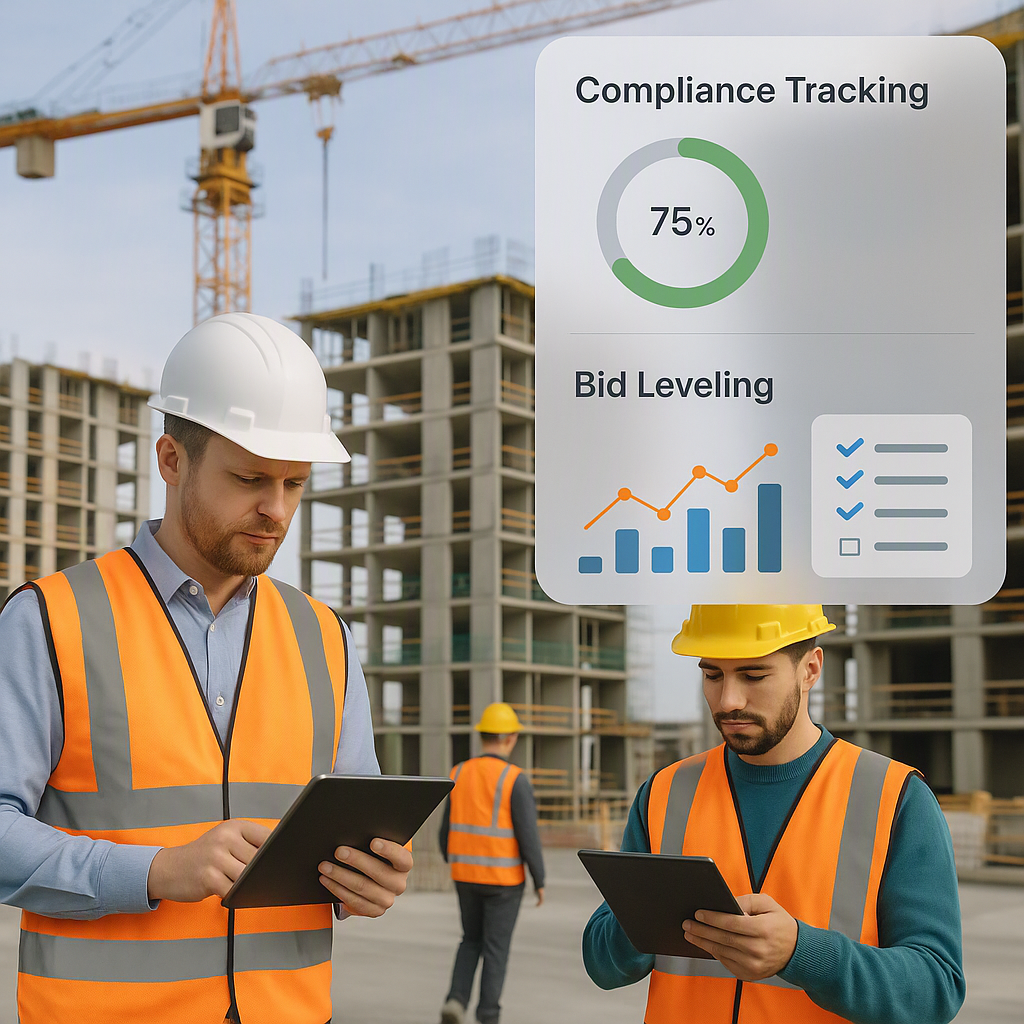
Why Subcontractor Onboarding Matters
Onboarding subcontractors isn't just paperwork—it’s a critical step to avoid project delays, scope disputes, and compliance headaches. Miss one document, and you could face insurance penalties, labor violations, or costly rework. The onboarding process ensures everyone is aligned on expectations, responsibilities, and safety protocols before work begins.
For general contractors (GCs), the stakes are even higher. In multi-site, multi-trade projects, one subcontractor’s misstep can derail schedules for an entire team. That’s why a structured onboarding process is non-negotiable.
Key Documents Required for Subcontractors
A strong onboarding checklist starts with documentation. Here’s what every GC must collect:
- Signed Subcontract Agreement: Defines scope, responsibilities, and payment terms.
- Certificate of Insurance (COI): Proof of coverage for general liability, workers’ compensation, and auto liability.
- W-9 Tax Form (US): Ensures compliance with IRS reporting requirements.
- State/Local Licenses: Valid credentials for operating within the project’s jurisdiction.
- Safety Program Documentation: OSHA certifications, safety manuals, and incident reporting procedures.
- Bonding Proof (if applicable): Guarantees project performance and protects against financial loss.
- Pre-Mobilization Checklist: Includes labor planning, equipment readiness, and site safety protocols.
- Vendor Setup Form: Bank details for payment processing.
- Project-Specific Addenda: Special requirements like environmental compliance or material certifications.
- Background Checks: Necessary for sensitive projects (e.g., government or healthcare).
Subcontractors must also ensure compliance with regional standards and regulations. For example, in India, adherence to CPWD DSR rates and state-specific SORs is often required. In GCC countries, labor laws may mandate residency permits and multi-currency billing setups. In the United States, OSHA safety certifications, prevailing wage compliance (Davis-Bacon Act), and tax documentation (W-9) are standard.
Pre-Mobilization Essentials
Before stepping onto the site, subcontractors must complete these pre-mobilization tasks:
- Site Orientation: Safety walkthroughs and hazard awareness.
- Labor Planning: Confirm manpower availability and ensure compliance with working hour regulations.
- Equipment Checks: Verify that tools and machinery meet project requirements.
- Material Delivery Coordination: Align procurement schedules with construction timelines.
Why does this matter? A subcontractor arriving unprepared can halt progress and increase costs. Delayed material delivery or incomplete labor planning might push back other trades, creating a domino effect on the schedule.
Leveraging Technology to Simplify Onboarding
Manual onboarding processes are slow and prone to errors. Technology can change that. Tools like EstimateNext streamline subcontractor onboarding by automating document collection, compliance checks, and scope alignment.
Here’s how:
- AI-Powered Document Ingestion: Upload insurance certificates, licenses, and agreements; the system extracts key details for quick review.
- Compliance Matching: Cross-reference rates and requirements with regional standards to ensure compliance.
- Labor Allocation Insights: Predict manpower needs based on project scope and historical data.
- Real-Time Updates: Keep subcontractors informed about deadlines and changes via centralized communication.
Illustrative example — A general contractor using technology to automate updates and assign responsibilities can reduce manual errors and improve efficiency in managing subcontractor workflows. These capabilities can transform onboarding processes by saving time and ensuring compliance.
Regional Compliance: Navigating Local Standards
Different regions have unique requirements for subcontractor onboarding. Here are some examples:
- India: Subcontractors must comply with CPWD DSR rates and state-specific SORs. Labor laws mandate adherence to minimum wage standards.
- GCC Countries: Multi-currency billing, labor residency permits, and compliance with FIDIC guidelines are common.
- United States: OSHA safety certifications, prevailing wage compliance (Davis-Bacon Act), and tax documentation (W-9) are standard.
Using technology to centralize these processes eliminates confusion and ensures compliance across multiple geographies. Digital tools can help streamline rate validation and document management, reducing the risk of errors and delays.
Integrating Onboarding with Procurement and Profitability
Subcontractor onboarding isn’t a standalone process—it ties directly into procurement and project profitability workflows:
- Procurement Coordination: Align subcontractor schedules with material delivery timelines.
- Scope Clarity: Use tools to normalize bids and identify gaps in scope.
- Profitability Tracking: Ensure subcontractor rates and labor costs align with project budgets.
Illustrative example — Delays in onboarding can lead to increased labor costs and disruptions in procurement schedules. Streamlining this process helps safeguard profitability and minimizes risks.
Conclusion
Subcontractor onboarding doesn’t have to be a bottleneck. With the right checklist and technology, you can ensure compliance, reduce delays, and improve overall project efficiency.
If you're struggling with manual onboarding processes, EstimateNext can help. Automate compliance checks, simplify document management, and keep your projects on track.