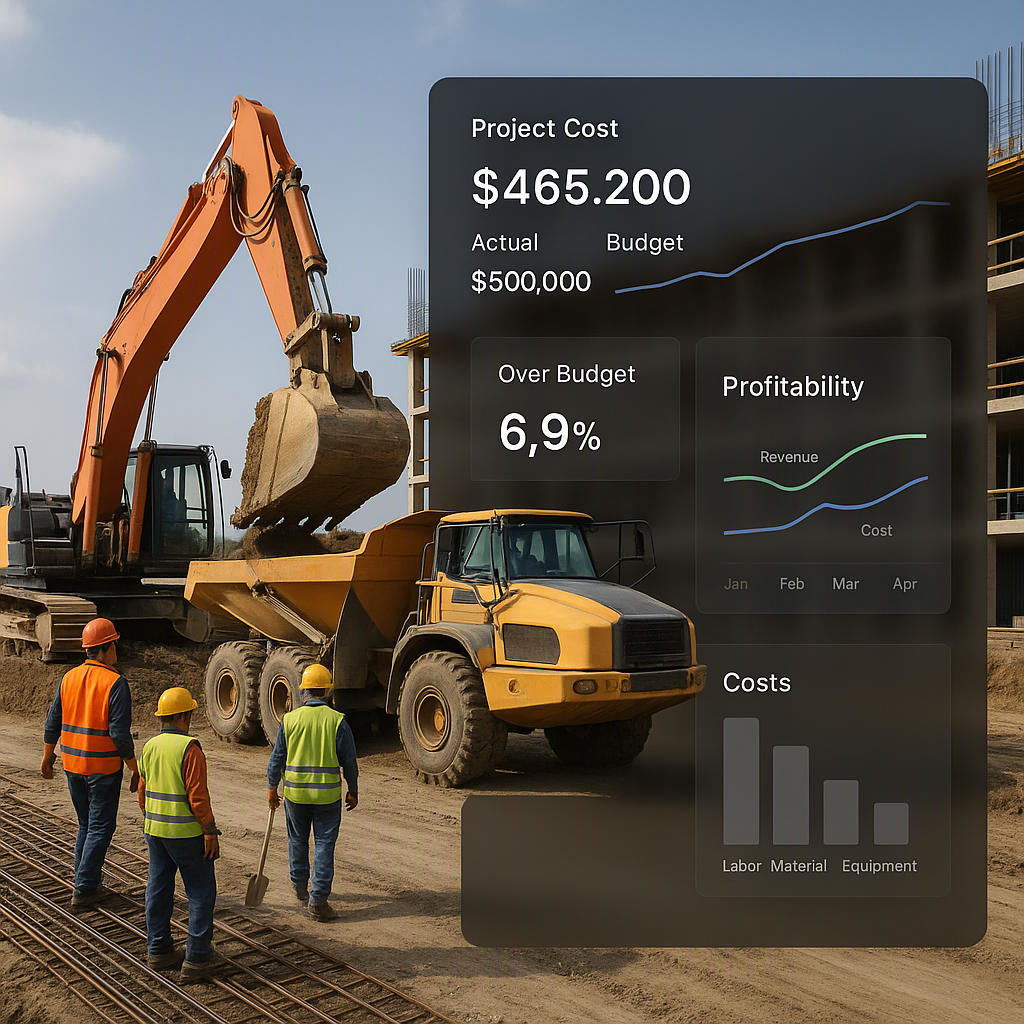
Understanding Margin Leakage in Construction
When I started out in the construction industry, I assumed that margin leakage was inevitable. It was just part of the job. You’d start a project, set a budget, track costs in Excel, and hope for the best. Sure, we’d run into problems—unexpected labor costs, material price hikes, or a subcontractor going over budget—but we’d deal with them as they came. If the project’s profit margins shrank, well, that was the cost of doing business, right?
I wasn’t alone in this thinking. Many of my peers—project managers, estimators, and even company owners—felt the same way. After all, construction projects are chaotic by nature. You can’t control everything. Or so I thought.
The Wake-Up Call
A few years ago, I worked on a project that seemed to be running smoothly. We had our budget, our timeline, and our trusted team. But by the time we closed the books, we realized that our profit margins had shrunk significantly.
Where did it go? That’s what kept me up at night. We combed through the numbers, line by line. Turns out, the leakage came from a dozen small issues that compounded over time: a missed inflation adjustment on material costs, overtime wages that weren’t accounted for, and a subcontractor who underbid but submitted change orders that we couldn’t contest effectively.
The worst part? All of these problems were solvable—if only we had spotted them earlier. But we didn’t. We were reactive, not proactive. By the time we noticed the issues, they had already eaten up our margins.
Why This Misconception Lingered
Looking back, I can see why the old belief stuck around for so long. For decades, construction has been about firefighting. Problems arise, and you solve them. There’s rarely time to step back and look at the big picture. Plus, the tools we had weren’t built for real-time visibility.
Take Excel, for example. It’s the industry standard for cost tracking, but it’s not designed to give you a live view of your project’s financial health. Sure, you can update your spreadsheets every week or even every day, but by the time you’ve entered all the data, the project has often moved on. You’re always playing catch-up.
And then there’s the matter of culture. Construction is a field where experience is king. When someone with decades on the job tells you that margin erosion is just “the way it is,” you tend to believe them. It’s hard to challenge conventional wisdom, especially when it’s coming from people you respect.
What Changed My Approach
The turning point came when I started experimenting with real-time profitability tracking tools. One particular feature caught my attention: the ability to compare BOQ (Bill of Quantities) estimates with actual costs in real-time.
These tools allow you to upload a BOQ, match line items to real-time rates from a database, and track cost deviations as they occur. If a material cost spikes or a subcontractor submits a change order, the system flags it immediately. You can then decide whether to renegotiate, adjust your resources, or cut costs elsewhere to stay on budget.
Illustrative example — On one project, we used real-time tracking to identify a supplier charging significantly higher rates for a key material. This allowed us to renegotiate the contract, saving a substantial amount on that single line item. This experience highlighted how much we could save by having better visibility into our costs.
Why Real-Time Tracking Matters
Here’s the thing: construction projects are living, breathing entities. Costs don’t stay static. Labor availability fluctuates. Material prices spike. Subcontractors change their scopes. If you’re only looking at your project financials once a week—or worse, at the end of the project—you’re already too late to fix problems.
Real-time profitability tracking changes the game in a few key ways:
-
Spotting Issues Early: If a cost starts to spiral out of control, you’ll know about it immediately. For example, if the labor hours for a specific task are exceeding what you budgeted, you can reallocate resources or renegotiate terms before it’s too late.
-
Data-Driven Decisions: Instead of relying on gut instinct, you can make informed choices based on real numbers. For example, if your profitability metrics show that a particular subcontractor’s work is consistently over budget, it might be time to find a new vendor.
-
Transparency: Real-time tracking doesn’t just help you manage costs; it also makes it easier to communicate with stakeholders. When a client asks why a project is over budget, you can show them exactly where the money went—and what you’re doing to fix it.
What I Do Differently Now
These days, I don’t start a project without setting up real-time profitability tracking. It’s non-negotiable. Here’s what we do:
- Upload the BOQ Immediately: This is the first step. The BOQ is the financial backbone of any project, and it needs to be in the system from day one.
- Set Up Alerts: We configure the system to flag any cost overruns, rate deviations, or other red flags. For instance, if there’s a significant increase in the cost of a key material, we’re immediately notified.
- Regular Check-Ins: Instead of waiting for weekly updates, we review the project’s financials frequently. This ensures that we’re always aware of the project’s financial health.
- Adjust on the Fly: If we see a problem, we act immediately. Whether it’s reallocating labor, renegotiating a contract, or finding a new supplier, we don’t wait for the issue to resolve itself.
What It Cost Me to Be Wrong
Looking back, I realize how much my old mindset cost us. It wasn’t just the lost margins on that one project. It was the missed opportunities for growth. Every rupee we lost to margin erosion was a rupee we couldn’t reinvest in the business. It was also a lot of unnecessary stress. There’s nothing worse than scrambling to fix a problem that could have been avoided.
But I’ll be honest: I’m still not 100% confident in real-time tracking. No tool is perfect, and there’s always the risk of over-relying on technology. That’s why we still double-check the system’s numbers manually. It’s not about replacing human judgment; it’s about augmenting it with better data.
Common Questions About Real-Time Project Profitability
1. What’s the biggest challenge in setting up real-time tracking? The biggest challenge is getting your team to adopt it. Many people are resistant to change, especially if they’re used to traditional methods like Excel. Start small—implement the system on one project and show your team the results.
2. Can small contractors benefit from real-time tracking? Absolutely. Real-time tracking tools are often scalable and can be tailored to the needs of smaller projects. Even if you’re managing just a handful of projects, real-time tracking can save you both time and money.
3. How accurate are these tools? While no system is 100% perfect, many tools are designed to improve accuracy over time. Most systems also allow for manual overrides, so you can always double-check the numbers.
4. What should I look for in a real-time tracking tool? Look for features like BOQ uploads, real-time rate matching, and customizable alerts. Also, make sure the tool integrates with your existing systems, like Procore or Bluebeam.
5. Is it worth the investment? In many cases, yes. The cost of the tool is often a fraction of the savings it generates by preventing margin leakage.
Final Thoughts
If you're tired of watching your margins shrink and want to take control of your project’s financials, real-time profitability tracking is a game-changer. These tools make it easier than ever to spot issues early, make data-driven decisions, and protect your bottom line.