Why Margins Are Shrinking Faster Than You Think
Margins for small to mid-size contractors are under attack. Rising material costs, labor shortages, and tighter project timelines are eating away profits. But the biggest culprit? Poor cost tracking. Most contractors don’t realize how much money they’re losing simply because their systems can’t keep up.
Let’s say you’ve got three active projects across two cities. Each has its own BOQ, subcontractor agreements, and material procurement schedules. Without real-time visibility into these moving parts, you’re flying blind. Missed estimates or delayed billing can wipe out your profits before you even realize it.
The Real Problem: Disconnected Systems
Most contractors are juggling multiple tools. Excel for estimates, WhatsApp for site updates, standalone accounting software for finance—it’s chaos. None of these systems talk to each other. You might have accurate data in one tool, but it’s meaningless if it doesn’t sync with the others.
Here’s a common scenario: Your site supervisor updates material usage in Excel. But procurement doesn’t see it. They order more than what’s needed, and now your storage costs spike. Worse, finance doesn’t catch the overrun until weeks later. The result? Margin erosion.
How Cloud ERP Fixes This
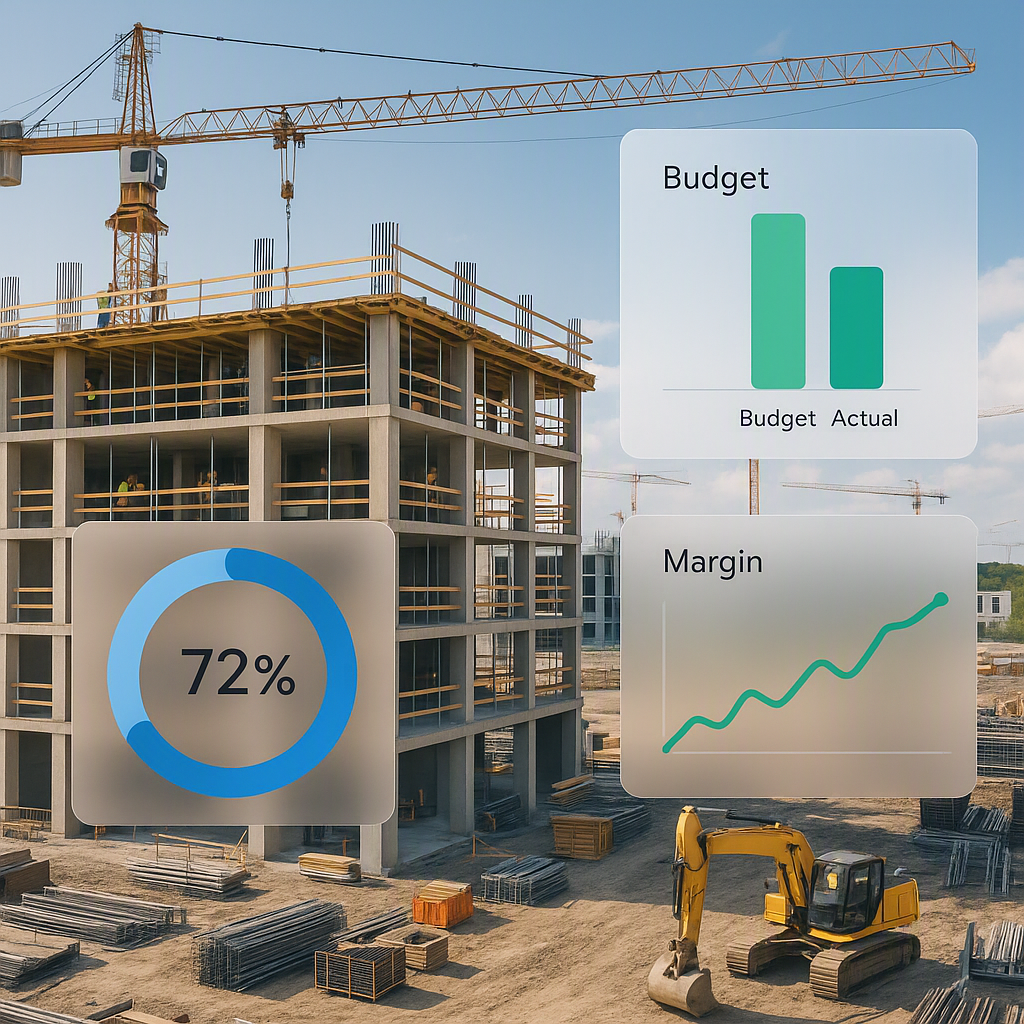
A cloud-based ERP system like JobNext solves this by giving you a unified platform. Everything—BOQs, procurement workflows, billing, subcontractor progress—is connected. You get real-time project profitability data, down to the last line item.
For example, JobNext tracks costs across scopes and estimates. If a subcontractor’s invoice exceeds the agreed scope, the system flags it immediately. No more waiting until the end of the month to discover cost overruns. According to their blog, contractors using cloud ERP systems grow faster because they plug these leaks before they become major losses.
Real-World Example: RA Billing Chaos
Revenue leakage in billing is another silent margin killer. RA bills get lost, stage-wise invoices get delayed, and your cash flow takes a hit. JobNext addresses this with six billing methods—RA Bills, stage-wise, monthly, supply BOQ, combined, and one-time—so nothing falls through the cracks.
Here’s how it works: The system ties billing directly to project progress. If you’ve completed 30% of the work, it ensures the corresponding billing is initiated immediately. No manual follow-up required. This structured approach eliminates delays and keeps your cash flow healthy.
Why Contractors Can’t Afford Manual Systems Anymore
Margins are shrinking, and projects are getting bigger. Without a cloud ERP, you’re stuck reacting to problems instead of preventing them. The construction ERP software market is already shifting toward cloud-based solutions because they offer scalability and better integration. Business Research Insights highlights the boom in cloud-based ERP adoption driven by IoT and real-time analytics.
Still skeptical? You might be thinking, "Doesn’t ERP require huge upfront costs?" Not anymore. SaaS solutions like JobNext are subscription-based, meaning you pay monthly instead of sinking capital into licenses. And because they’re cloud-based, there’s no hardware maintenance.
Key Takeaways
- Poor cost tracking and disconnected systems are killing margins.
- Cloud ERP systems unify workflows, giving contractors real-time profitability insights.
- Features like structured billing and procurement workflows help stop revenue leakage.
- SaaS models make cloud ERP affordable for small to mid-size contractors.
Contractors across India and the GCC are already making the switch. If you’re still relying on manual systems, it’s time to rethink. JobNext has detailed how contractors can stop revenue leakage and grow profitably by adopting cloud ERP. Worth checking out.
Ready to see JobNext in action?
Multi-tenant SaaS ERP for construction, facilities management, and contracting — covering preconstruction, project execution, procurement, HR & payroll, equipment, finance, and 150+ analytics reports.
Get Started Free →