₹1.2 Crore Lost: The Subcontractor Problem Contractors Face
Margins in construction aren't just thin—they're razor-thin. Subcontractor cost overruns are one of the biggest culprits. We've seen contractors lose as much as ₹1.2 crore annually because their site teams failed to track progress accurately. Think that's an exaggeration? It's not. The problem starts with loose workflows: vague work scopes, inconsistent progress measurement, and rushed payments.
Here's the brutal math: paying subcontractors before verifying progress eats into your margins. And if you're managing multiple sites, the chaos multiplies. This isn't a new issue—it’s a persistent one that most contractors ignore until it’s too late.
Why Subcontractor Tracking Needs a Fix
The Root Cause: Lack of Structured Workflows
Take measurement sheets. They’re the backbone of subcontractor payment workflows, but in many companies, these are still handled on spreadsheets or paper. What happens? Errors creep in—manual calculations lead to mismatches, and unverified progress data results in payments for incomplete work.
For instance, a civil contractor in Bengaluru reported that they spent ₹30 lakh in excess payments over six months because site teams relied on verbal progress updates instead of measurement sheets. When the contractor audited their workflows, they found discrepancies in almost 40% of the payment records.
Actionable Steps to Fix Subcontractor Tracking
- Digitize Measurement Sheets: Use software to log progress in real-time. This eliminates manual errors and allows for instant verification.
- Tie Payments to Verified Progress: Create a system where no payment is approved unless progress has been measured and logged. This ensures accountability.
- Standardize Workflows: Define clear processes for work requisitions (WR), request-for-proposals (RFP), work orders (WO), and progress measurement.
- Train Site Teams: Educate site managers to use standardized forms and software effectively. A system is only as good as the people using it.
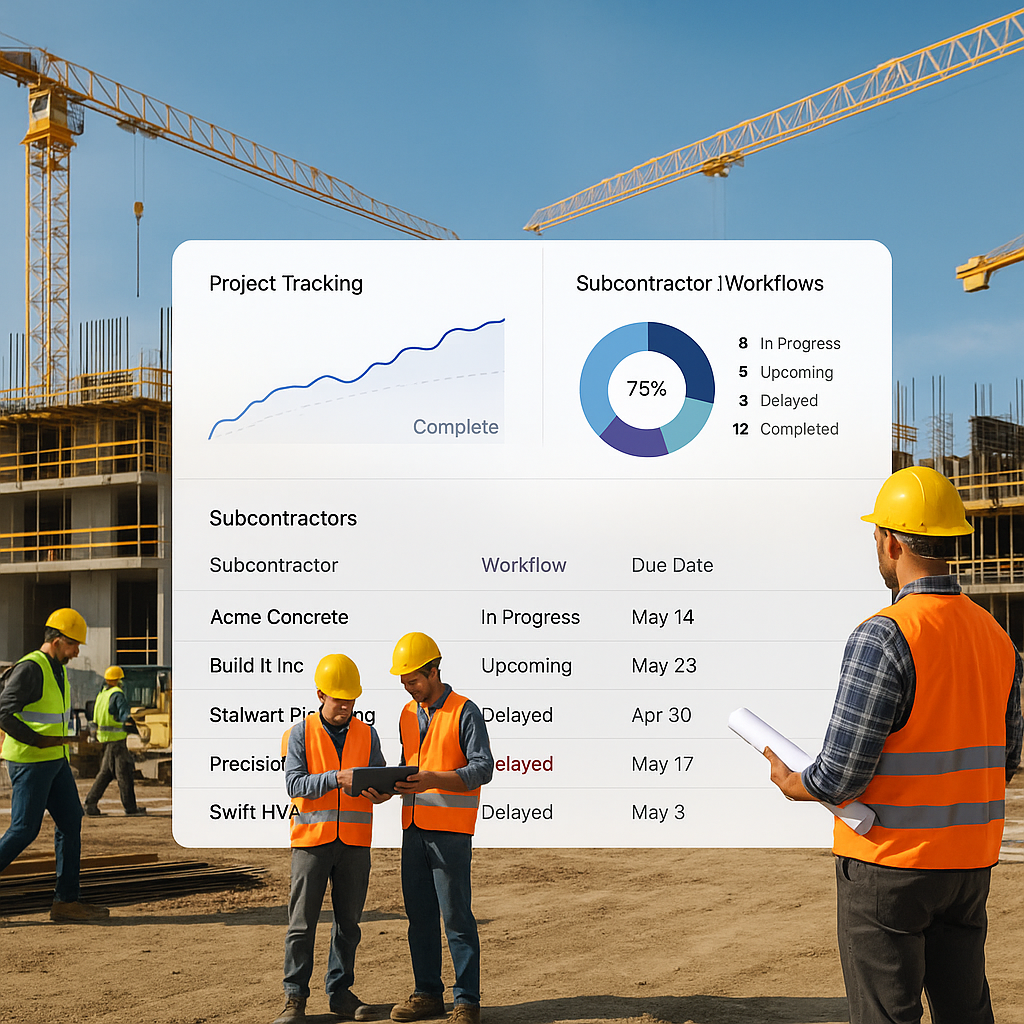
A structured system solves this. JobNext’s subcontractor module, for example, ties progress tracking directly to payment approvals. The workflow starts with WRs, moves to RFPs, and ends with WOs. Measurements are logged into the system as progress sheets, which are then used to calculate payment amounts. No progress? No payment. This alone can save contractors lakhs annually.
The ₹1.2 Crore Case Study
The Problem: Verbal Updates and Chaos
Let’s look at an example. A mid-size MEP contractor in Mumbai ran into trouble managing 15 subcontractors across three active sites. They were paying subcontractors based on verbal updates from site managers. Then one day, they discovered ₹1.2 crore of unaccounted payments for work scopes that didn’t match the BOQ.
The Solution: Measurement-Based Progress Tracking
They switched to JobNext’s subcontractor tracking system, and within six months, they recovered ₹25 lakh in margin erosion. Here’s how:
- Mandatory Progress Logging: Site managers had to log actual work completed into the system before payment approval.
- Automated Flagging: The system flagged mismatches between logged progress and work orders, forcing corrections before payments went out.
- Integrated BOQs: Work orders were tied directly to BOQs, ensuring payments aligned with the original scope.
Results Achieved:
- ₹25 lakh recovered within six months.
- Improved transparency across subcontractor workflows.
- Reduced disputes with subcontractors over payment mismatches.
Why Most ERPs Fail Subcontractors
Generic ERP systems don’t address the nuances of subcontractor management. They focus on macro-level project tracking but miss critical micro-level workflows like progress measurements and approval chains. This often leads to:
- Overpayments: Payments are approved without verifying ground-level progress.
- Scope Creep: Subcontractors take on work outside the BOQ, leading to budget overruns.
- Audit Challenges: Lack of transparency makes it difficult to trace discrepancies.
Specialized Construction ERPs vs. Generic ERPs
Specialized construction ERPs like JobNext are designed to manage these nuances. For example:
| Feature | Generic ERPs | Specialized Construction ERPs (e.g., JobNext) |
|---|---|---|
| Progress Tracking | Basic, often manual | Digitized and tied to payments |
| BOQ Integration | Limited | Seamlessly linked to work orders |
| Approval Workflows | Basic | Multi-level with audit trails |
| Subcontractor Bid Evaluation | Not included | Comparative statements with multiple criteria |
By focusing on micro-level workflows, specialized ERPs prevent losses and improve efficiency.
What to Look for When Choosing Construction ERP
If subcontractor cost overruns are draining your margins, here's what you should prioritize:
1. Measurement-Based Progress Tracking
Ensure your ERP ties subcontractor payments to verified progress. For example, JobNext flags discrepancies between logged progress sheets and payment requests, forcing corrections before approval.
2. Work Scope Integration
Look for systems that link BOQs to work orders seamlessly. This prevents scope creep and ensures payments align with the original budget.
3. Approval Workflows
Multi-level approval chains prevent unauthorized payments. Choose an ERP that allows customizable workflows for different project scales.
4. Audit Trails
You need full transparency on subcontractor selection decisions. Systems like JobNext maintain complete records of RFPs, comparative statements, and selection rationale.
5. Comparative Subcontractor Evaluation
Tools that allow you to evaluate subcontractor bids side-by-side based on price, technical capability, and compliance are invaluable. This ensures that you select the most viable subcontractors before work begins.
FAQ: Common Questions About Subcontractor Workflows
1. How do I handle disputes with subcontractors over progress measurements?
Use a standardized digital system. When progress is logged into software with timestamps and site photos, disputes are easier to resolve. Both parties have access to objective data.
2. What’s the best way to manage subcontractor bids?
Use ERPs with a comparative statement feature. This allows you to evaluate bids based on multiple criteria, ensuring you select subcontractors who offer both competitive pricing and technical expertise.
3. Can subcontractor tracking work on small projects?
Absolutely. While it’s often more critical for large projects, even small projects benefit from digitized workflows. For example, tracking progress through measurement sheets can prevent even minor budget overruns.
4. What happens if subcontractors refuse to use digital systems?
Offer training sessions and incentives for compliance. Highlight how these systems can streamline their payments and reduce disputes. Most subcontractors adapt once they see the benefits.
5. How long does it take to implement a construction ERP?
Implementation timelines vary depending on project size and complexity. For most contractors, systems like JobNext can go live within 3-6 weeks, including training.
The Takeaway
Subcontractor cost overruns aren’t a problem you can fix with spreadsheets. You need a system that integrates progress tracking, payment approvals, and compliance checks. Tools like JobNext not only prevent losses but also streamline workflows, saving time and sanity.
Whether you're managing one site or ten, digitizing subcontractor workflows is no longer optional—it’s essential. If you're dealing with subcontractor chaos, JobNext can help. Get started free →
Learn more at JobNext.ai