The Hidden Cost of Procurement Chaos
Let’s start with a number: ₹25 lakh. That’s what a mid-sized contractor loses annually to procurement inefficiencies, according to industry estimates. Sound high? It’s not when you break it down. One missed RFQ approval here, a delayed vendor PO there, and material price escalations everywhere. The math is brutal.
Why Procurement Is a Silent Margin Killer
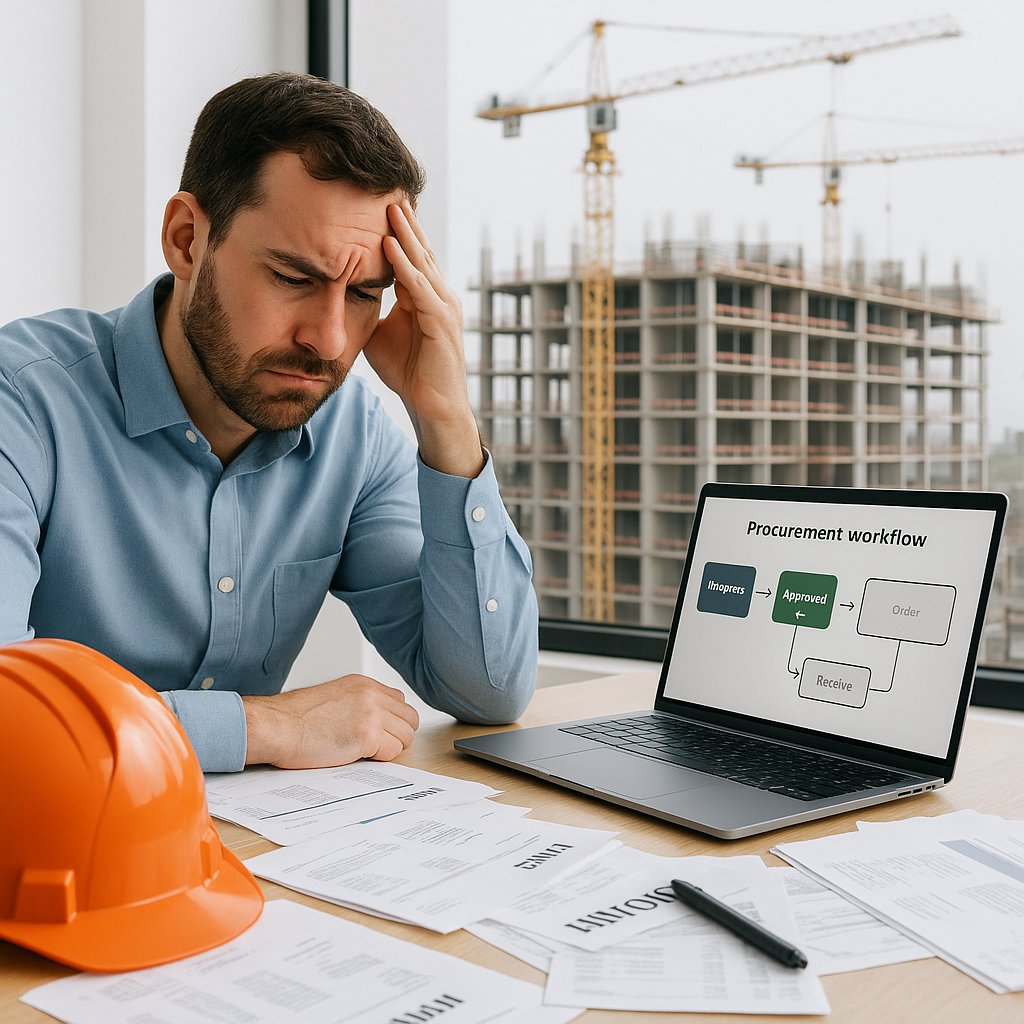
Procurement is messy in construction, and not for lack of trying. Picture this: A project manager scribbles a material request (MR) on a piece of paper. It gets passed to procurement, who then calls three vendors to ask for quotes. Two respond late, one forgets GST compliance, and approvals take days to move through email chains. Meanwhile, the project is delayed, prices spike, and margins quietly erode.
Case Study: A Contractor’s Procurement Nightmare
Take the example of a mid-sized contractor in Delhi. They relied on paper-based material requests and manual spreadsheets to manage procurement. One small misstep—a delayed vendor response—created a domino effect. Material delivery was delayed by 10 days, forcing the contractor to pay ₹1.5 lakh extra in material price escalation and ₹75,000 in penalties for project delays. This scenario is not unique; it’s a recurring issue across the construction industry.
The ERP Fix: Structured Procurement Workflows
This is where a purpose-built construction ERP like JobNext steps in. Unlike generic ERP systems, JobNext’s procurement module enforces a structured workflow: MR → RFQ → Vendor Offers → PO → Approval. No skipped steps, no email chaos, no lost paperwork.
Step-by-Step Breakdown of the Workflow
- Material Requests (MR): Every site manager enters material needs directly into the system. No paper, no WhatsApp messages. The requests are logged with time stamps and project IDs, ensuring traceability.
- Requests for Quotation (RFQ): Procurement can instantly circulate RFQs to pre-approved vendors. The system tracks responses and compliance, saving hours otherwise spent chasing vendors.
- Vendor Offers: All vendor quotes are logged and compared in a single dashboard. No manual spreadsheets, no missing data.
- Purchase Orders (PO): Only approved offers move to the PO stage, with multi-level approval workflows ensuring budget compliance.
Real-World Results
One of our clients, a mid-sized contractor in Pune, reported a 25% reduction in procurement delays after implementing this system. Their procurement turnaround times dropped from 9 days to just 3 days, saving them ₹18 lakh annually by avoiding price spikes during delays. That’s not just time saved—it’s real money.
Why Most ERPs Fail Here
You might be thinking, "But we already use an ERP. Why hasn’t it fixed this?" Here’s the thing: Most generic ERPs aren’t designed for construction. They don’t understand the nuances of multi-site operations, vendor prequalification, or material-specific compliance.
Common Shortcomings of Generic ERPs
- Lack of Construction-Specific Features: Generic ERPs often fail to account for the complexities of multi-site operations. For instance, they may not support project-specific material requests.
- GST and TDS Compliance: Many systems can’t handle GST-compliant POs out of the box. In markets like India and GCC, this is a non-negotiable requirement.
- Poor Vendor Management: Vendor prequalification and compliance tracking are often missing, leading to delays and disputes.
JobNext addresses these issues head-on. Its GST- and TDS-compliant workflows ensure every invoice is accurate. Plus, vendor management tools help contractors maintain pre-approved vendor lists and track performance over time.
Actionable Steps to Fix Procurement Chaos
If your procurement process still relies on paper, emails, or spreadsheets, here’s what you need to do:
- Audit Your Current Workflow: Identify bottlenecks like delayed approvals, missed RFQs, or untracked vendor performance.
- Set Up Vendor Prequalification: Build a database of pre-approved vendors with documented compliance history.
- Invest in a Construction-Specific ERP: Choose a solution like JobNext that understands the nuances of your industry.
- Train Your Team: Ensure everyone from site managers to procurement officers is trained to use the ERP effectively.
- Monitor and Optimize: Use reporting tools to track procurement KPIs like turnaround times and cost savings.
Comparison Table: Generic ERP vs. Construction-Specific ERP (JobNext)
| Feature | Generic ERP | JobNext Construction ERP |
|---|---|---|
| Multi-Site Operations | Limited functionality | Fully supported |
| GST/TDS Compliance | Manual setup required | Built-in automation |
| Vendor Prequalification | Rarely available | Comprehensive tools included |
| Material-Specific Tracking | Limited customization | Tailored for construction |
| Multi-Level Approval Workflow | Basic templates | Industry-specific workflows |
FAQs
-
How do I know if my procurement process is costing me money?
- Look for delays in material deliveries, frequent vendor disputes, or repeated budget overruns. These are classic signs that your procurement workflow is inefficient.
-
Can smaller contractors afford ERP systems?
- Yes. Cloud-based ERPs like JobNext are subscription-based, meaning you can start small and scale as needed. Many contractors recoup their investment within months through saved costs.
-
How long does it take to implement an ERP?
- For most mid-sized contractors, JobNext implementation takes 3-6 months, depending on the modules you choose and the complexity of your existing workflows.
-
What makes JobNext different from generic ERP systems?
- JobNext is designed specifically for construction, with workflows tailored to multi-site operations, subcontractor coordination, and compliance needs. Generic ERPs simply don’t offer this level of specialization.
-
Can ERP systems integrate with my existing tools?
- Yes. JobNext supports integrations with commonly used tools like accounting software and project management platforms, ensuring a seamless workflow.
Final Thoughts
Procurement chaos doesn’t have to be the norm. With the right tools, you can turn it into a competitive advantage. JobNext’s structured workflows ensure every rupee is accounted for, every purchase is compliant, and every project stays on track.
By investing in a purpose-built construction ERP, you’re not just fixing a process—you’re protecting your margins and ensuring long-term profitability.
Learn more at JobNext.ai