Why Real-Time Cost Tracking is Non-Negotiable
Margins in construction are razor-thin—2-7% on average, according to Rippling. That means every rupee or dirham untracked is a dent in your profit. Yet, most contractors still rely on disconnected spreadsheets or outdated software that only gives them a partial picture.
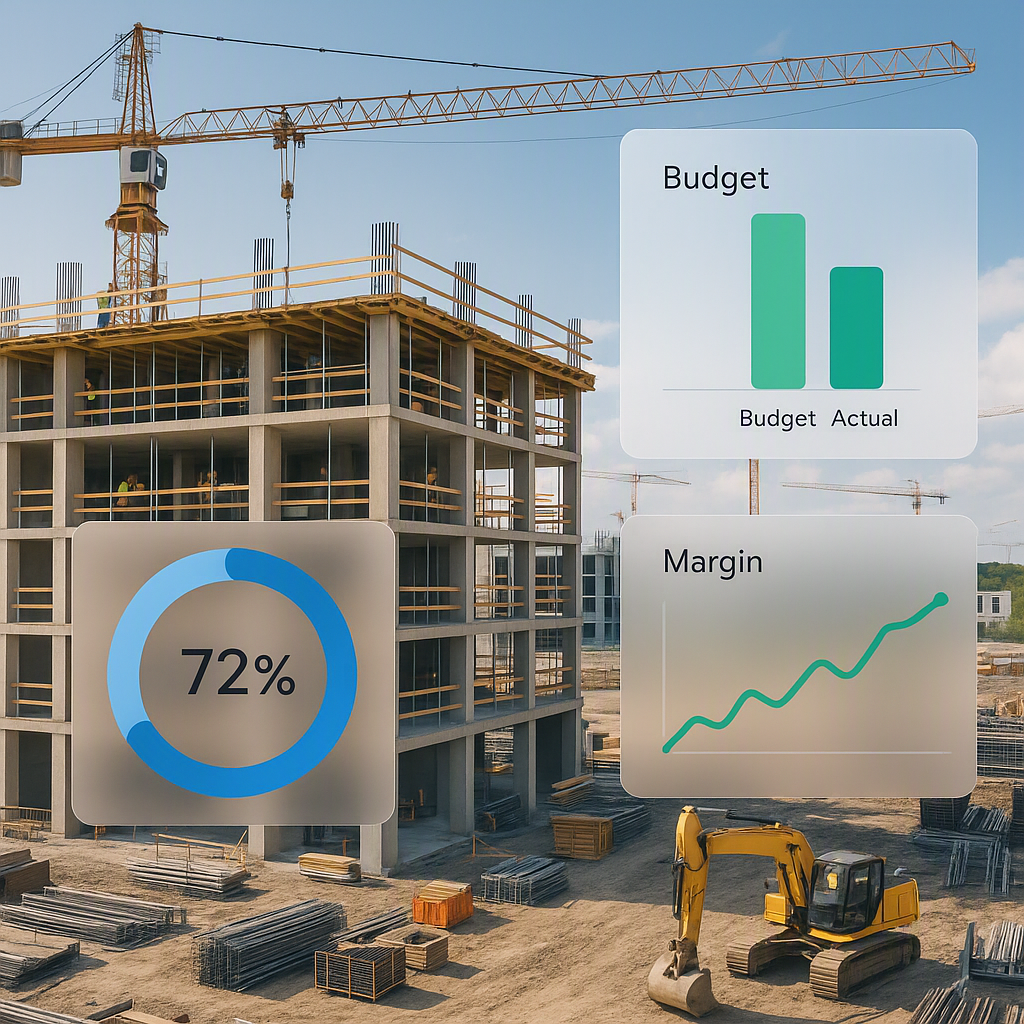
Imagine this: you're managing five projects simultaneously. One is running 20% over budget because material costs spiked last week. Another is losing margin because labor hours were misallocated. Without real-time visibility, you'd find out too late—months into the project, when corrective action is impossible.
Real-time cost tracking isn't just a nice-to-have. It's essential. And it's where most ERP systems fail.
What 'Real-Time' Actually Means
Let's clear up a common misconception. 'Real-time' doesn't mean pulling data at the end of the day. It means seeing changes as they happen—material deliveries, labor hours, subcontractor payments—all tied directly to your BOQs, scopes, and estimates.
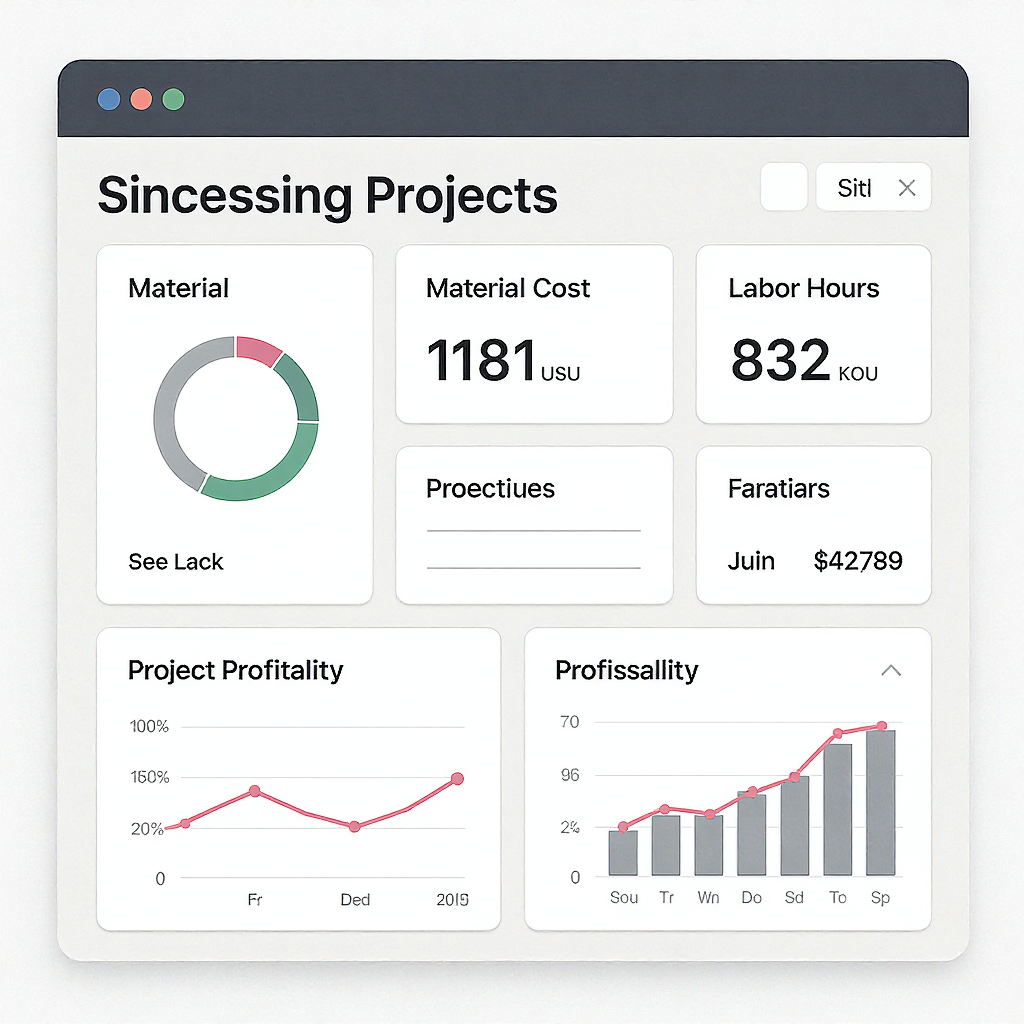
With JobNext, for example, every expense is recorded against the project's hierarchy (BOQ/WBS/Scope) immediately. The dashboards update in seconds, showing profitability at every level of detail. This isn't theory; it's practical control that prevents disasters like margin erosion.
Why Most ERPs Fall Short
The obvious question: if real-time tracking is so critical, why do so many ERP systems miss the mark?
-
Fragmented Modules: Many systems split procurement, billing, and HR into separate tools. That creates blind spots. For example, your billing system doesn't know about a late material delivery flagged in procurement.
-
Delayed Updates: Some ERPs only sync data nightly or weekly. By the time you see the cost impact, it’s too late.
-
Complex Interfaces: Real-time tracking is useless if your team avoids the system because it’s clunky.
JobNext addresses all three issues. It unifies tendering, procurement, billing, and project execution into one platform. Updates are instant, and the interface is designed for busy project managers—not IT experts.
Practical Example: Stopping Revenue Leakage
Let’s talk billing. Contractors lose revenue when they miss billable items—whether it’s an RA Bill, stage-wise billing, or monthly billing. JobNext’s six billing methods ensure nothing falls through. Every billable item is linked to actual progress tracked on-site.
Take RA Bills, for example. JobNext calculates them directly from measured progress, ensuring subcontractor payments align with verified work. No guesswork. No surprises. Just clean, accurate billing.
Want proof this works? This JobNext case study shows how one contractor using real-time cost tracking cut project delays by 20% and improved billing accuracy by over 30%.
Actionable Takeaway
If you're evaluating construction ERP solutions, don't just tick the 'cost tracking' box. Ask these questions:
- Can it track costs at BOQ and scope levels in real time?
- Does it integrate procurement, billing, and HR into one system?
- Are updates truly instant?
And if the answer is 'no' to any of these, walk away. You can't afford to gamble with your margins.
Related Reading
To dive deeper into this topic, check out The Hidden Cost of Tool Fragmentation: Why Contractors Need Unified Platforms. It explains how disconnected systems eat into profitability and why unified platforms like JobNext deliver measurable results.
Real-time cost tracking isn’t a luxury—it’s a survival tool for contractors. The right ERP doesn’t just track costs; it eliminates blind spots, prevents revenue leakage, and keeps your projects on budget. If your current system doesn’t do this, it’s time to rethink what 'best ERP software for construction' really means.
Ready to see JobNext in action?
Multi-tenant SaaS ERP for construction, facilities management, and contracting — covering preconstruction, project execution, procurement, HR & payroll, equipment, finance, and 150+ analytics reports.
Get Started Free →