
Why Scaling Often Eats Margins
Ask any contractor who’s grown from 5 projects a year to 50: it’s not just about doing more work. It’s about controlling the chaos that comes with growth. Margins shrink because costs slip through the cracks, systems don’t talk to each other, and people get overwhelmed. Scaling a contracting business without scalable software is like racing a car with mismatched tires — you’ll move faster, but it’ll be a rough ride.
The Revenue Leakage Problem
One of the biggest profit killers we see is revenue leakage in billing. Imagine this: you’ve got multiple billing methods across projects — RA bills for one, stage-wise for another, supply BOQ for a third. If you’re tracking all this manually or on disconnected systems, something will inevitably fall through the cracks. Missed invoices, incorrect rates, or unapproved billings add up fast.
JobNext’s structured billing system solves this mess. With six billing methods built into the platform — RA Bills, stage-wise, monthly, supply BOQ, combined, and one-time — contractors can track every payment accurately. Approval workflows ensure no bill goes out without proper checks. The Contractor’s First ERP: What Nobody Tells You About Going Digital explains why this kind of automation is critical for profitability.
Disconnected Systems = Profit Killers
Another issue is tool fragmentation. A typical mid-size contractor uses separate systems for tendering, procurement, HR, and finance. It works fine at 10 employees. But at 200? It’s a nightmare. Teams waste hours reconciling numbers between platforms, and every mistake costs money.
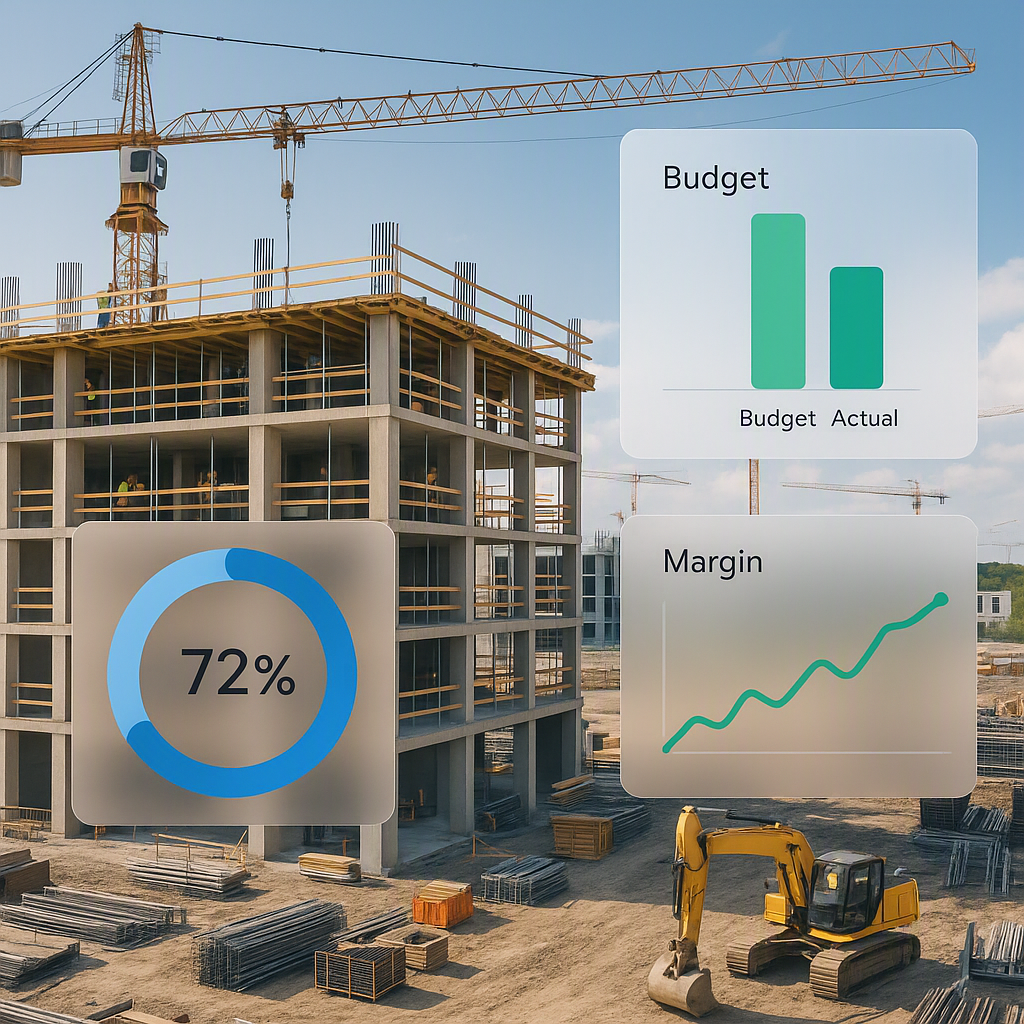
Unified platforms like JobNext prevent this fragmentation. Everything — from material requisitions to payroll — runs on one system. No double data entry. No manual reconciliations. And you get real-time dashboards showing profitability across BOQs, scopes, and estimates. The Hidden Cost of Tool Fragmentation dives deeper into why disconnected systems sink margins.
Scaling HR Across Multiple Sites
Let’s talk about HR. Managing payroll for 50 workers is simple. Managing 500 across multiple sites? Not so much. You’ve got attendance issues, statutory compliance (PF, ESI, GCC regulations), and staff allocation headaches. Without scalable HR software, you’re stuck with chaos.
JobNext’s HR and payroll module simplifies multi-site operations. Attendance tracking integrates directly with payroll. Staff allocation across camps and sites is centralized. And compliance gaps disappear with automated deductions and GCC-region support. It’s the kind of system that scaled Al Nab’a Services from 21-day payroll cycles to automated workflows across 6,000 employees — as detailed in How a 6,000-Employee Facilities Management Company Transformed Operations in 12 Months.
The Scalability Test
Here’s the real question: how do you know if your software can scale with your business? The answer lies in flexibility. Scalable software adapts to your growing needs — whether it’s adding new billing methods, integrating new compliance requirements, or managing bigger teams.
Take JobNext. It’s a multi-tenant SaaS platform, meaning it grows with you. Need multi-currency support for a GCC project? Done. Need role-based access for a bigger team? Easy. The platform’s modular architecture ensures you’re never stuck with a system that bottlenecks your growth.
Final Thoughts
Scaling a contracting business is tough. But the right software makes it manageable — and profitable. Tools like JobNext don’t just automate tasks; they prevent the kind of chaos that eats margins. If you’re serious about growth, invest in scalable systems before growth overwhelms your operations.
For a step-by-step strategy to modernize your operations, check out Construction Digital Transformation: A No-Nonsense Roadmap for Mid-Size Contractors.
Ready to see JobNext in action?
Multi-tenant SaaS ERP for construction, facilities management, and contracting — covering preconstruction, project execution, procurement, HR & payroll, equipment, finance, and 150+ analytics reports.
Get Started Free →