The Unseen ₹50 Lakh Problem
Margins are tight. One late delivery, a failed material test, or a subcontractor missing milestones can snowball into a ₹50 lakh loss before you realize it. Why? Because most contractors don’t track vendor performance with enough discipline. They rely on gut instinct or scattered spreadsheets instead of structured metrics.
Let’s be blunt: this doesn’t work. If you’re running multiple projects across sites, you need a vendor performance scorecard. Not just for accountability, but for survival.
Why Vendor Performance Tracking Matters
Think about the last time a vendor let you down. Maybe they didn’t deliver rebar on time, stalling your concrete pour. Or a subcontractor overbilled you for labor that wasn’t even on-site. These incidents don’t just hurt your timeline — they bleed your margins.
A McKinsey study on construction inefficiencies found that poor vendor and subcontractor management is a top contributor to cost overruns, eroding up to 30% of project profitability. That’s staggering.
Example: The ₹10 Lakh Loss Nobody Saw Coming
Consider this real-world scenario: A mid-sized residential project in Pune faced delays because a vendor failed to supply steel reinforcement bars on time. The delay pushed the concrete pour into monsoon season, requiring additional waterproofing measures. The extra costs — ₹6 lakh for waterproofing and ₹4 lakh for extended labor — erased 15% of the project’s expected profit. The root cause? The contractor had no system for tracking the vendor’s past delivery performance.
The Cost of No System
Without a performance scorecard, you’re blind to patterns:
- Which vendors consistently deliver late?
- Who has the highest defect rates in materials?
- Are you overpaying for low-quality work?
Data Backed Insight
A 2020 Deloitte study found that companies using structured vendor performance systems reduced procurement costs by up to 12% and project delays by 18%. If you’re not tracking vendor performance, you’re leaving money on the table.
The good news? You can fix this with a structured approach.
The Core Components of a Vendor Performance Scorecard
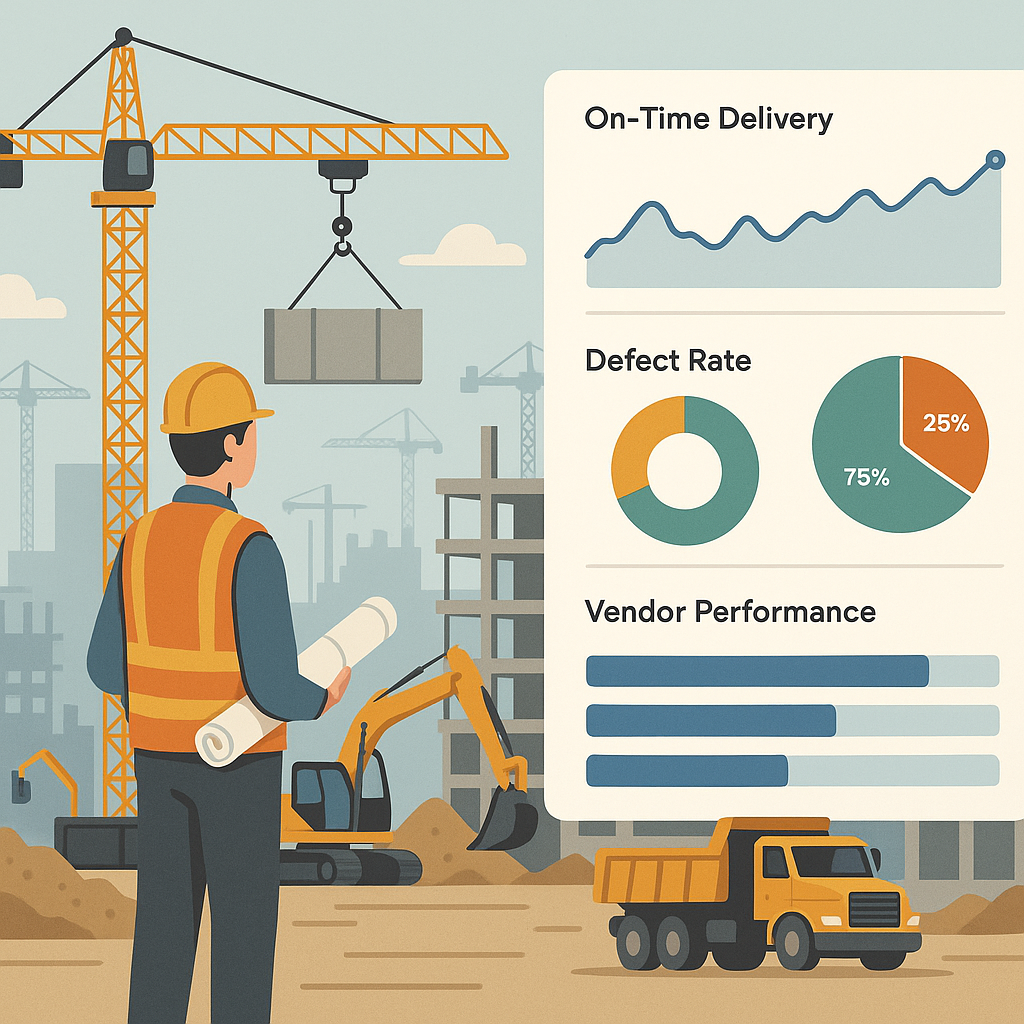
A vendor performance scorecard is your roadmap to data-driven decisions. It tracks key metrics that matter most to your projects. Let’s break it down:
| Metric | What It Tracks |
|---|---|
| On-Time Delivery | Percentage of POs or work packages delivered on or before the promised date. |
| Material Quality | Number of defective items or failed quality tests. |
| Cost Variance | Difference between quoted costs and actual costs after delivery. |
| Compliance | Adherence to safety certifications, GST filings, and labor compliance. |
| Responsiveness | Average time taken to respond to RFQs, RFPs, or issue resolution. |
| Past Performance | Track record of delivery, quality, and adherence to terms across previous jobs. |
Example: Heatmaps in Action
Platforms like JobNext provide a heatmap of vendor on-time delivery performance. Green highlights vendors who consistently meet deadlines, while red flags late deliveries. The system also generates comparative statements for vendor offers, enabling you to choose vendors with the best combination of cost, quality, and reliability.
Why These Metrics Matter
- On-Time Delivery: Ensures your project stays on schedule.
- Material Quality: Reduces rework and ensures compliance with engineering standards.
- Cost Variance: Helps avoid budget overruns.
- Compliance: Prevents legal or regulatory penalties.
- Responsiveness: Indicates reliability in critical situations.
Practical Steps to Build Your Scorecard
1. Start with Data Collection
You can’t measure what you don’t track. Start by collecting data on every vendor interaction. This includes:
- Purchase Orders: Track promised vs. actual delivery dates.
- Quality Reports: Document defects and rejected items.
- Invoices: Compare against agreed rates to flag overbilling.
- Compliance Records: Ensure GST, TDS, and safety certifications are updated.
Actionable Tip:
Use a centralized digital platform to store all records. Spreadsheets are prone to human error and lack real-time accessibility.
2. Define Your Metrics
Not all metrics are equally important. Your focus should depend on your industry and project type:
- Construction Contractors: Prioritize material quality and on-time delivery.
- MEP Contractors: Focus on responsiveness and compliance.
- Developers: Emphasize cost variance and past performance.
3. Use Technology to Automate
Manual tracking won’t cut it, especially for larger projects. Systems like JobNext automate vendor performance tracking. Features include:
- A vendor directory searchable by compliance status and past performance.
- Automated comparative statements showing L1/L2 rankings.
- Real-time dashboards for procurement KPIs like cost variance and delivery timelines.
4. Score Vendors Periodically
Assign scores to vendors based on their performance across metrics. For instance:
| Vendor | Score (out of 100) | Key Issues |
|---|---|---|
| XYZ Steel | 85 | Late delivery (5 cases) |
| ABC Plumbing | 75 | High defect rate (12%) |
| DEF Heavy Equip | 90 | Slight cost overruns |
5. Use the Scores for Procurement Decisions
Data without action is meaningless. Use performance scores to:
- Shortlist reliable vendors for critical jobs.
- Negotiate better terms with high-performing suppliers.
- Flag underperformers for review or replacement.
Real-World Case Studies
Case Study 1: Switching Vendors to Save ₹12 Lakh
A mid-size contractor in Mumbai used JobNext to identify a subcontractor who consistently overbilled on RA Bills. By switching to a more reliable vendor, they saved ₹12 lakh over one year. Automated workflows ensured compliance checks and comparative statements were part of every procurement cycle.
Case Study 2: Reducing Defect Rates by 20%
An infrastructure firm in Bangalore tracked material quality data for six months. They identified that one supplier accounted for 60% of defects. After renegotiating terms and holding the vendor accountable, defect rates dropped by 20%, saving ₹8 lakh in rework costs.
Common Pitfalls to Avoid
- Ignoring Non-Price Factors: The lowest bidder isn’t always the best choice. Consider quality, timeline, and compliance.
- Incomplete Data: Missing records make your scorecard unreliable. Make data entry non-negotiable for your team.
- Lack of Follow-Through: If you’re not using the scorecard to change procurement decisions, it’s pointless.
FAQ: Vendor Performance Tracking
1. How often should I update the scorecard?
Monthly updates are ideal. This ensures you capture enough data for meaningful insights without overwhelming your team.
2. What’s the best software for vendor performance tracking?
Tools like JobNext and Procore are tailored for construction projects, offering features like automated compliance checks and real-time dashboards.
3. Can small contractors benefit from this system?
Absolutely. Even small contractors can improve margins by identifying and working with reliable vendors.
4. How should I handle underperforming vendors?
Start with a review meeting. Share their performance data and agree on an improvement plan. If there’s no progress, consider replacing them.
5. What’s the ROI of implementing a vendor scorecard?
On average, contractors see a 10-15% improvement in project profitability within the first year of using a structured system.
Conclusion: A Better Path Forward
Building a vendor performance scorecard isn’t just about avoiding losses. It’s about creating a culture of accountability and continuous improvement. With tools like JobNext, you can automate the process, gain real-time insights, and ensure no vendor performance issue slips through the cracks.
If you’re serious about stopping margin erosion, JobNext can help. Get started free →
Learn more at JobNext.ai